
*The person's story described below is fictitious and was instead founded on experiences shared by BugMD customers.
Read this before you start your RV this spring or summer.
Most families have no idea what's been happening inside their RV these past 2 weeks.
While you've been dreaming about your first spring or summer road trip…
Planning the campgrounds.
Booking the spots.
Promising the kids "just a few more weeks"…
Mice have been doing something inside your stored RV that puts your entire family at risk.
They haven't just been hiding in there.
They've been breeding. Nesting. Chewing through wires. Contaminating every surface with urine and droppings.
And the moment you open that door to load up for your trip?
You're about to walk your family into a health hazard that the CDC says can be deadly.¹
I know this because it happened to my family last spring.
And it nearly cost us everything.
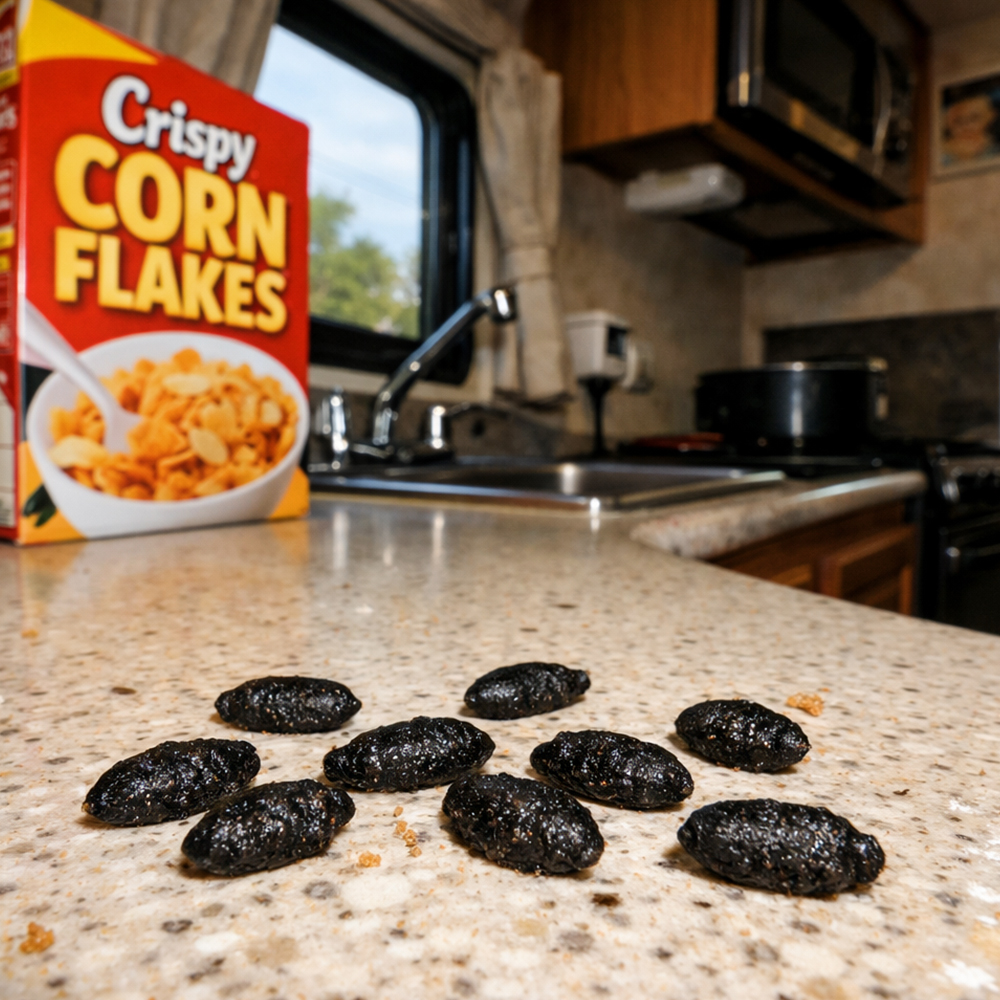
"I Thought We Were About to Have the Best Spring Break of Our Lives. Instead, I Found $4,800 in Damage and a Health Hazard."
My name is Linda Adams.
I'm a mom of two from outside Denver, Jake is 8 and Emma is 5.
Every late spring, our family loads up our 28-foot travel trailer and hits the road. It's our tradition. Our escape. The thing that gets us through the long Colorado winters.
Last April, I was practically bouncing off the walls with excitement.
We'd booked two weeks at a gorgeous campground outside Moab, Utah.
Red rocks.
Hiking.
Stargazing with the kids.
My husband Tom had been counting down the days…
"Three more weeks!" he'd say every morning over coffee, grinning like a kid on Christmas Eve.

The Saturday before spring break, we drove out to the storage lot to start prepping the trailer.
The kids were singing in the backseat. Emma had her stuffed bunny. Jake had his binoculars for "wildlife spotting."
Tom pulled up next to our trailer and I hopped out to unlock the door.
I grabbed the handle.
Swung the door open.
And the smell hit me like a wall.
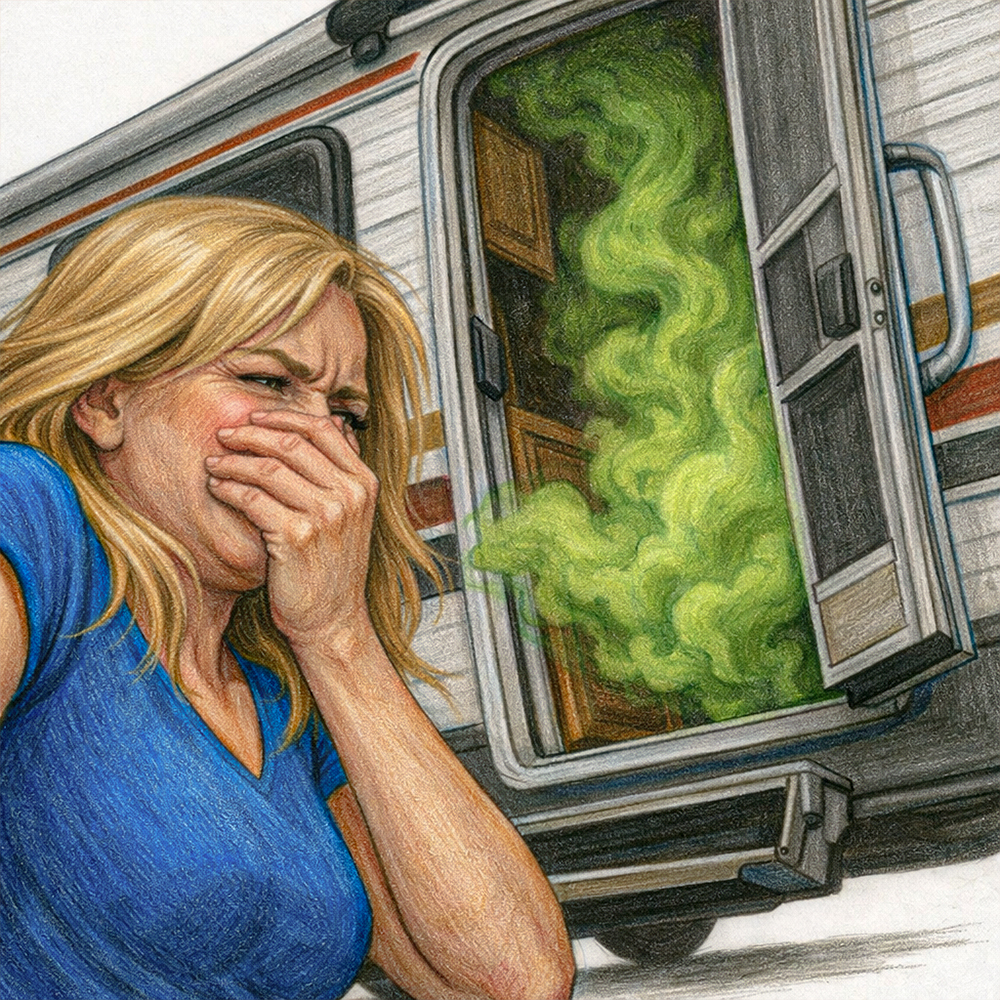
That sharp, acrid, ammonia stench of concentrated mouse urine that had been baking in a sealed space for four months.
"Mom, what's that SMELL?" Jake yelled from the car.
"Stay in the car!" I shouted back.
My eyes were already watering.
I stepped inside and my stomach dropped through the floor.
The Damage Was Everywhere
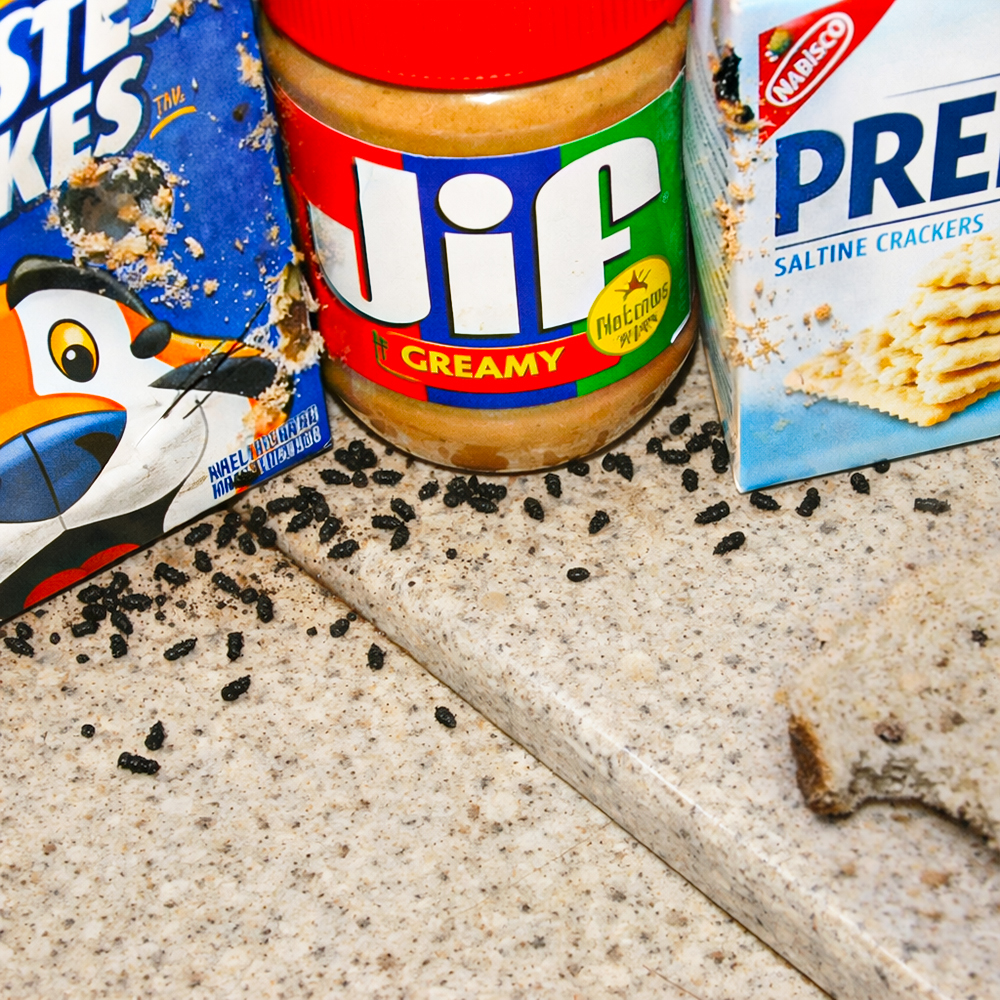
Mouse droppings. Hundreds of them.
Scattered across the kitchen counter, the dinette table, the floor, the bed.
Not dozens. HUNDREDS.
I opened a cabinet, droppings poured out like someone had emptied a pepper shaker.
The upholstery on the dinette seats?
Shredded.
They'd burrowed inside and built nests in the foam cushioning.
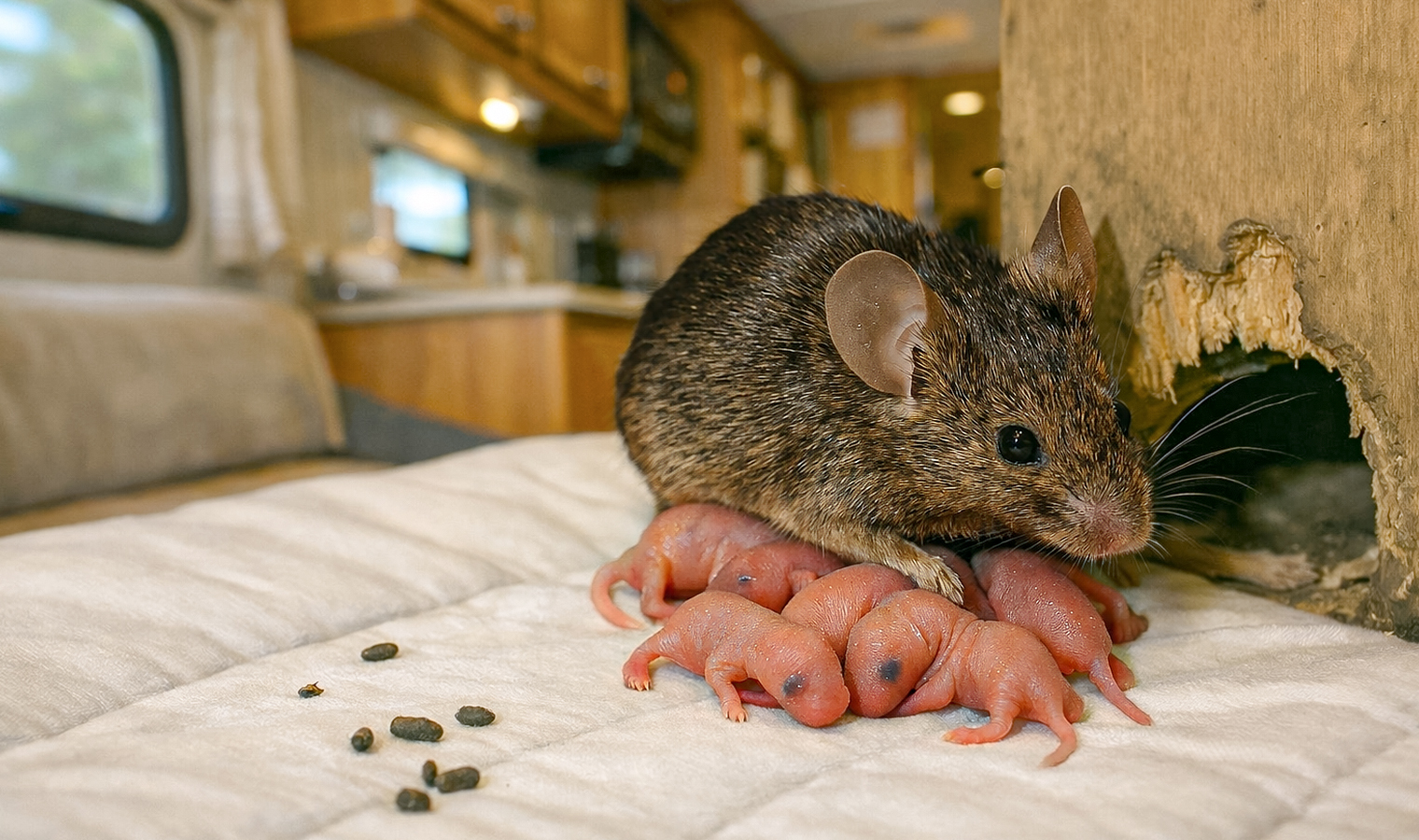
I pulled back the mattress in the bedroom and found a massive nest, shredded insulation, torn fabric, and tiny pink baby mice squirming inside.
I screamed.
Actually screamed.
Tom came running. He took one look and his face went white.
"Don't touch anything," he said. "Don't let the kids in here."
Then he crawled under the dashboard and found the real nightmare.
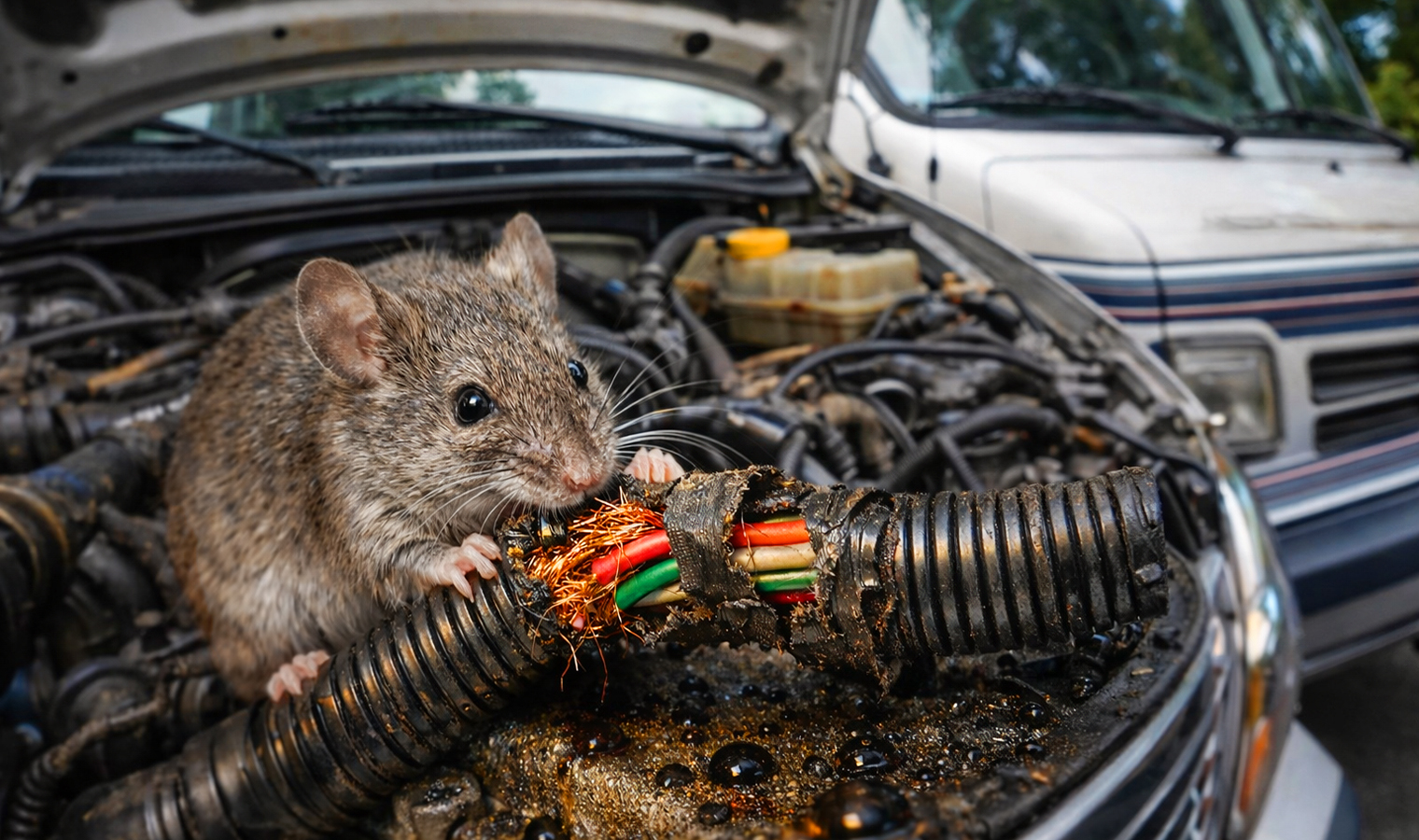
The wiring harness behind the dashboard was destroyed.
Chewed through in dozens of places.
Bare copper exposed everywhere.
The brake controller wiring, chewed.
The backup camera, dead.
The refrigerator power line, severed.
"Linda..." Tom said quietly, still on his back under the dash. "We can't drive this. It's not safe."
Emma started crying in the backseat because she could tell something was wrong.
Jake pressed his face against the car window. "Mom, are we still going to Moab?"
I couldn't answer him.
I just stood there in that disgusting, contaminated trailer, our dream vacation evaporating in front of me, and felt like the worst mother in the world.

The Phone Call That Ruined Spring Break
I called the RV repair shop that Monday.
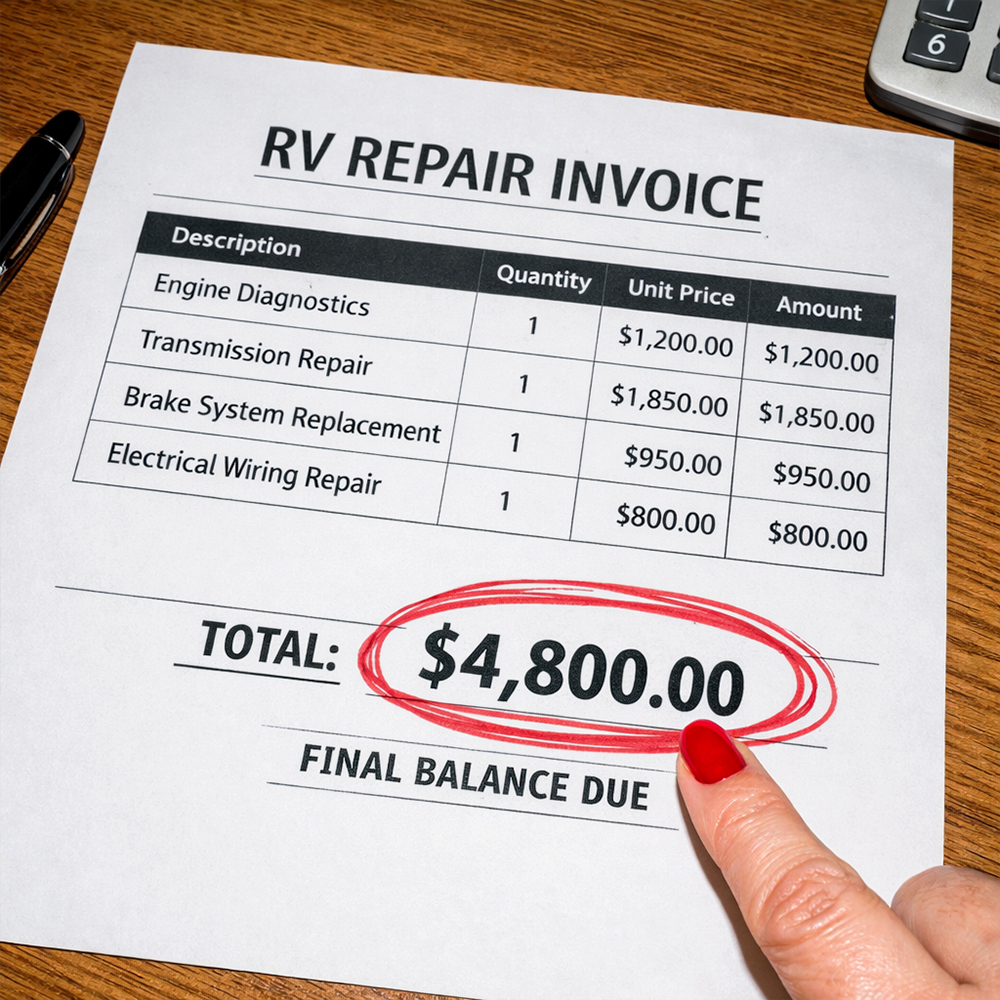
The diagnosis took three days. The estimate?
$4,800.
Complete rewiring of the dashboard harness.
New brake controller.
Replacement of all contaminated upholstery and bedding.
Professional decontamination because of the biological hazard.
"You're actually lucky," the technician told me.
"Lucky?! I'm out five grand and my kids are heartbroken!"
"Lucky because the chewed wiring didn't short and start a fire while it was in storage. I've seen it happen twice. Total loss both times."
That hit different.
The thought of our trailer catching fire in a storage lot packed with 200 other RVs...
I felt sick.
But the financial damage was just the beginning.
When I called our insurance company, the agent was sympathetic, but firm.
"Mrs. Mercer, rodent damage is classified as preventable maintenance in your policy. Your claim has been denied."
$4,800. Out of pocket. Right before a vacation we'd already paid for.
Tom and I sat at the kitchen table that night, staring at each other across a pile of bills.
"We can fix the trailer OR we can go on the trip," he said. "We can't do both."
Spring break came and went. The kids went to a neighbor's house for a few days. We told them the trailer "needed repairs."
Jake didn't talk to me for two days, Emma cried every night asking when we were going camping.
I failed them. That's what it felt like.
I'd failed my family over something as stupid as MICE.
What Most RV Owners Get Completely Wrong About Mice
Here's what I didn't understand at the time, and what most RV owners still don't:
By the time you open your RV in spring or summer, the damage has been happening for MONTHS.
Your stored RV is the perfect target.
It's warm.
It's dark.
It's undisturbed.
It has endless chewing material, wiring, insulation, upholstery, and hoses.
To a mouse, your stored RV isn't a vehicle.
It's a heated apartment with an all-you-can-chew buffet and zero predators.
And here's the part that nobody tells you:
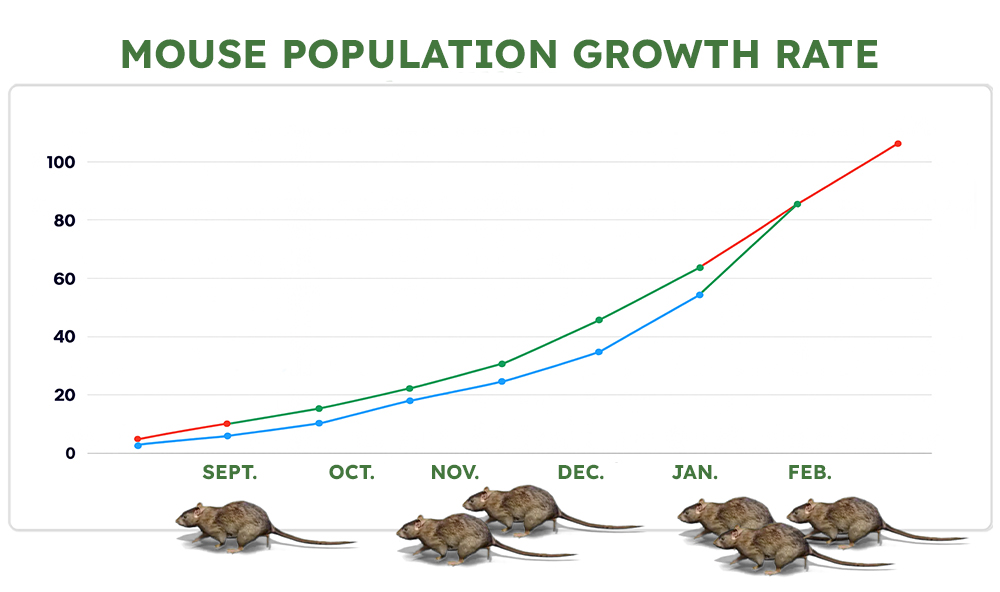
A single pair of mice can produce up to 2,000 descendants in a year.²
That one mouse that squeezed through a dime-sized gap in October?
By December, she had 8 babies.
By January, those babies were breeding too.
By the time you open that door in March or April?
You're not dealing with a mouse.
You're dealing with a colony that's been living, breeding, eating, and contaminating your RV for 120+ days straight.
And every single thing those mice touched?
The surfaces your kids will eat on, sleep on, play on?
It's covered in something far more dangerous than you realize.
The Hidden Health Hazard That Makes RV Rodent Damage a True Emergency
The repair bill was devastating.
But it was the phone call from our pediatrician that truly terrified me.
After I described what we'd found in the trailer, she went quiet.
"Linda, did you or the kids go inside the RV before you realized what was happening?"
"I did. For about five minutes. The kids stayed in the car."
"Good. That's good." She paused. "I need you to listen carefully. When you open an enclosed space that's been contaminated with rodent droppings, you can stir up particles that contain hantavirus."
"Hanta... what?"
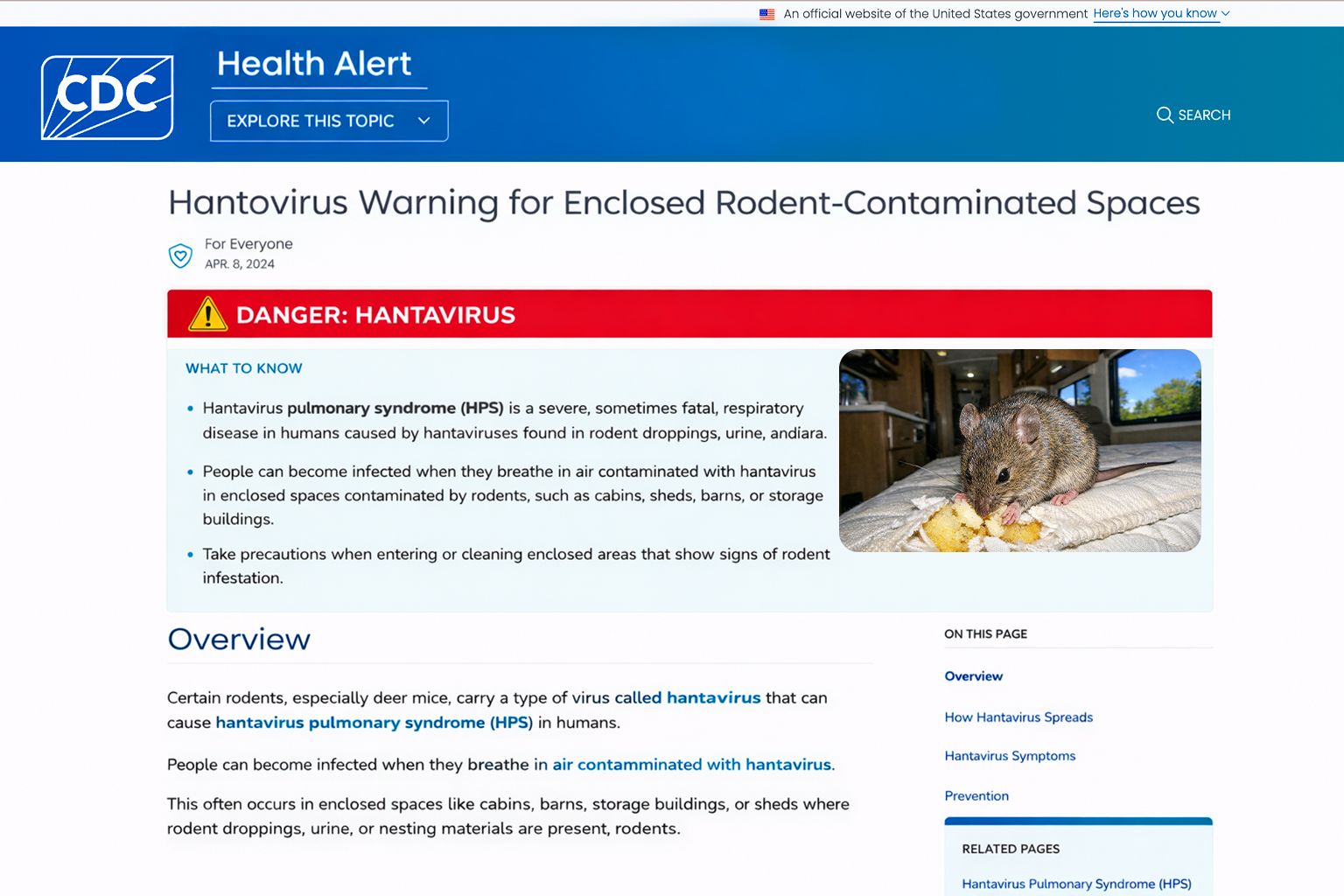
"Hantavirus Pulmonary Syndrome. The CDC says it's spread when dried rodent urine, droppings, or nesting materials are disturbed and become airborne. In enclosed spaces like RVs, the risk goes up significantly."¹
"It's fatal in nearly 40% of cases."³
My blood went cold.
I had walked into that contaminated trailer and BREATHED that air for five minutes. Without a mask. Without gloves.
If I had let the kids run in ahead of me, like they do every other year...
"There's no cure," the doctor continued. "No vaccine. If someone gets it, it's intensive care and hope for the best."
I hung up the phone and sat on the floor of my kitchen and cried.
This wasn't just about a ruined vacation anymore.
This was about my children's lives.

"It's Not Just Your RV, It's Every RV Owner's Problem Right Now"
In the weeks after our disaster, I started talking to other RV owners.
At the storage lot. In Facebook groups. At the dealership while our trailer was being repaired.
And I heard the same story over and over and over again.
"We opened ours last April, $3,200 in damage."
"Mice destroyed our AC ductwork. $2,100. Insurance denied it."
"Found a nest in our engine compartment. Mechanic said we were one drive away from a fire."
According to an RVtravel poll, nearly 30% of RV owners report paying for rodent-related repairs.⁴
That's almost 1 in 3.
And repair costs can range from $300 to over $10,000, with some cases hitting $15,000 or more.⁵
This wasn't just MY problem. This was an epidemic that nobody was talking about.
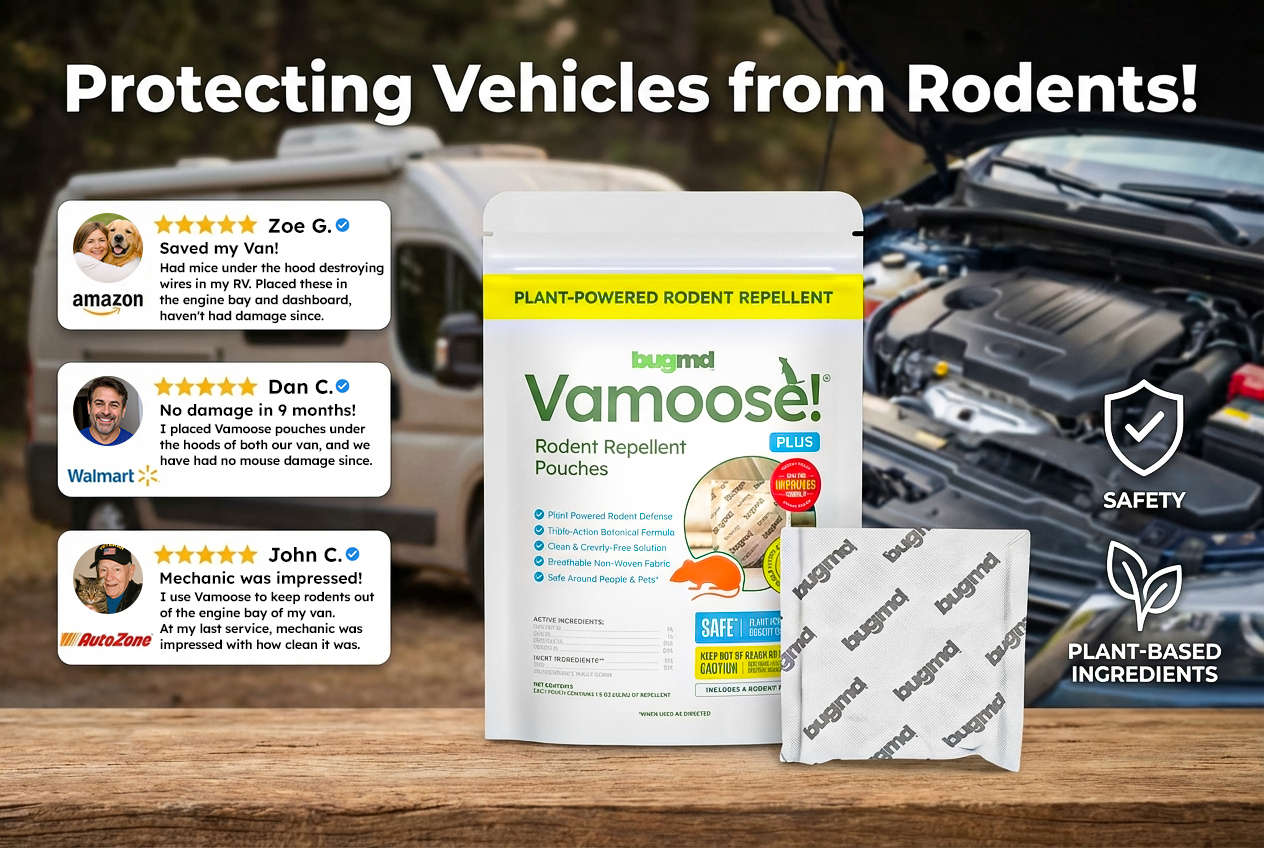
I was determined to never let this happen again.
So I did what any desperate, angry, heartbroken mom would do.
I became obsessed with finding a solution.
What I Tried (And Why Every Single "Solution" Failed)
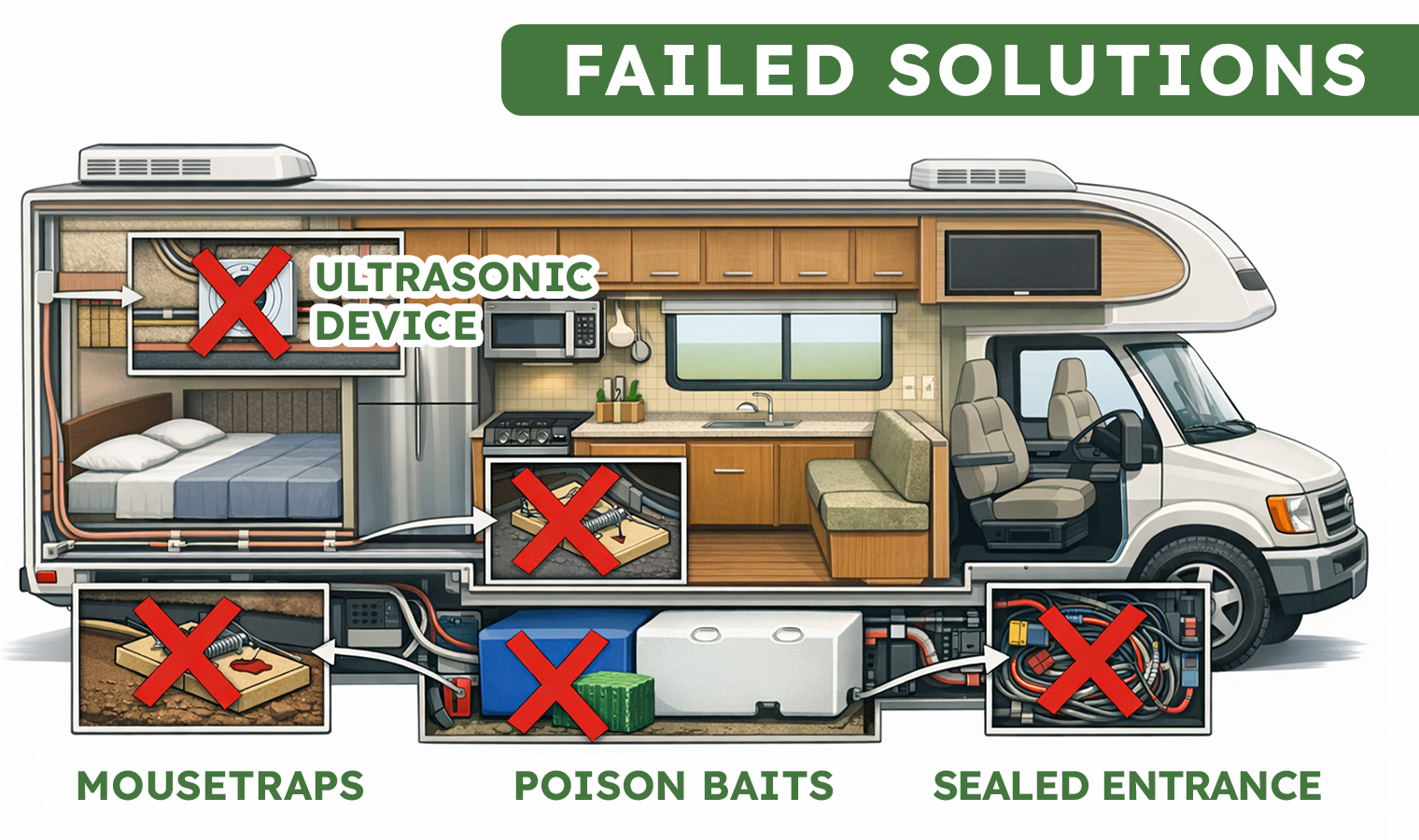
For the next three weeks, while we waited for the repair shop to work on our vehicle, I tried everything the internet and every RV forum recommended.
I spent over $600 on "prevention" products.
Every single one failed.
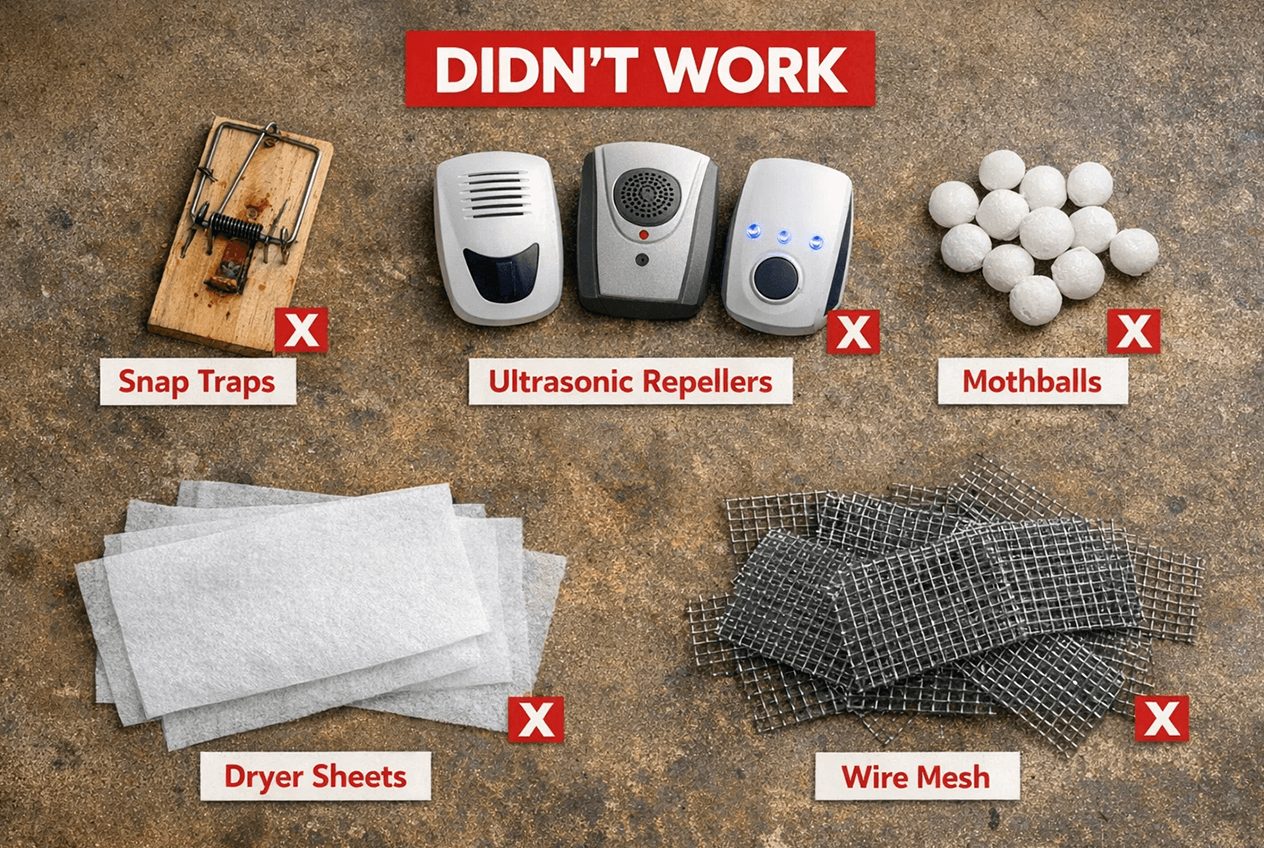
SNAP TRAPS:
I placed 12 snap traps inside the trailer before it went back to storage.
Caught two mice in the first week, which felt like progress.
But here's what nobody tells you about traps: for every mouse you catch, there are 5-10 more you don't see. And while you're catching one at a time, the rest are breeding every 21 days.
You're bailing water out of a sinking boat with a teaspoon.
Plus, the cleanup. I'll spare you the details, but finding a dead mouse in a snap trap in 90-degree summer heat inside a sealed RV?
I nearly threw up.
ULTRASONIC DEVICES:
$140 on three "professional grade" ultrasonic repellers.
Plugged them into the RV's outlets.
Two weeks later? Fresh droppings right next to the devices. The mice were practically nesting ON them.
Turns out, rodents habituate to ultrasonic frequencies within 72 hours.⁶ The devices become background noise. Like a ticking clock you stop hearing.
And in an RV's complex interior, walls, compartments, furniture, insulation, the sound waves can't even reach where mice actually nest.
Complete waste of money.
DRYER SHEETS AND MOTHBALLS:
The "old wives' tale" approach.
I stuffed 40 dryer sheets and a box of mothballs throughout the trailer.
The result?
My RV smelled like a grandmother's closet that had been hit by a lavender tornado.
The mice?
They NESTED IN the dryer sheets. Used them as bedding material.
And mothballs? They contain naphthalene, which is toxic to humans and pets. So I'd traded a mouse problem for a chemical hazard my kids couldn't be around.⁷
STEEL WOOL IN ENTRY POINTS:
Spent an entire Saturday stuffing steel wool into every gap I could find, which felt productive.
But here's the thing about RVs, they have DOZENS of potential entry points.
Plumbing penetrations, electrical entry points, vent openings, gaps around slide-outs.
Mice can squeeze through holes as small as 1/4 inch in diameter.⁸
I sealed 20 gaps. They found the 21st.
PROFESSIONAL EXTERMINATOR:
$350 for a "preventive treatment." He placed poison bait stations around the exterior of the RV.
"They'll eat the bait and die outside," he promised.
What he didn't mention: mice often carry poison back to their nests inside walls and compartments, where they die and decompose in places you can't reach. The smell lasts for weeks.
And dead mice attract flies, beetles, and other pests.
I was spending a fortune playing an endless game of whack-a-mole while the mice kept winning.
The Day Everything Changed
Three weeks after our spring break disaster, I was at the RV repair shop picking up our trailer.
$4,800 lighter, summer trip plans in shambles, still no solution for preventing it from happening again.
That's when I met Jim Holloway.
Jim was dropping off his fifth-wheel for routine maintenance. We got to talking in the waiting room.
"You look like you've been through it," he said, nodding at the paperwork in my hands.
"These stupid mice ruined our Spring break, you won’t even guess what I had to pay…”
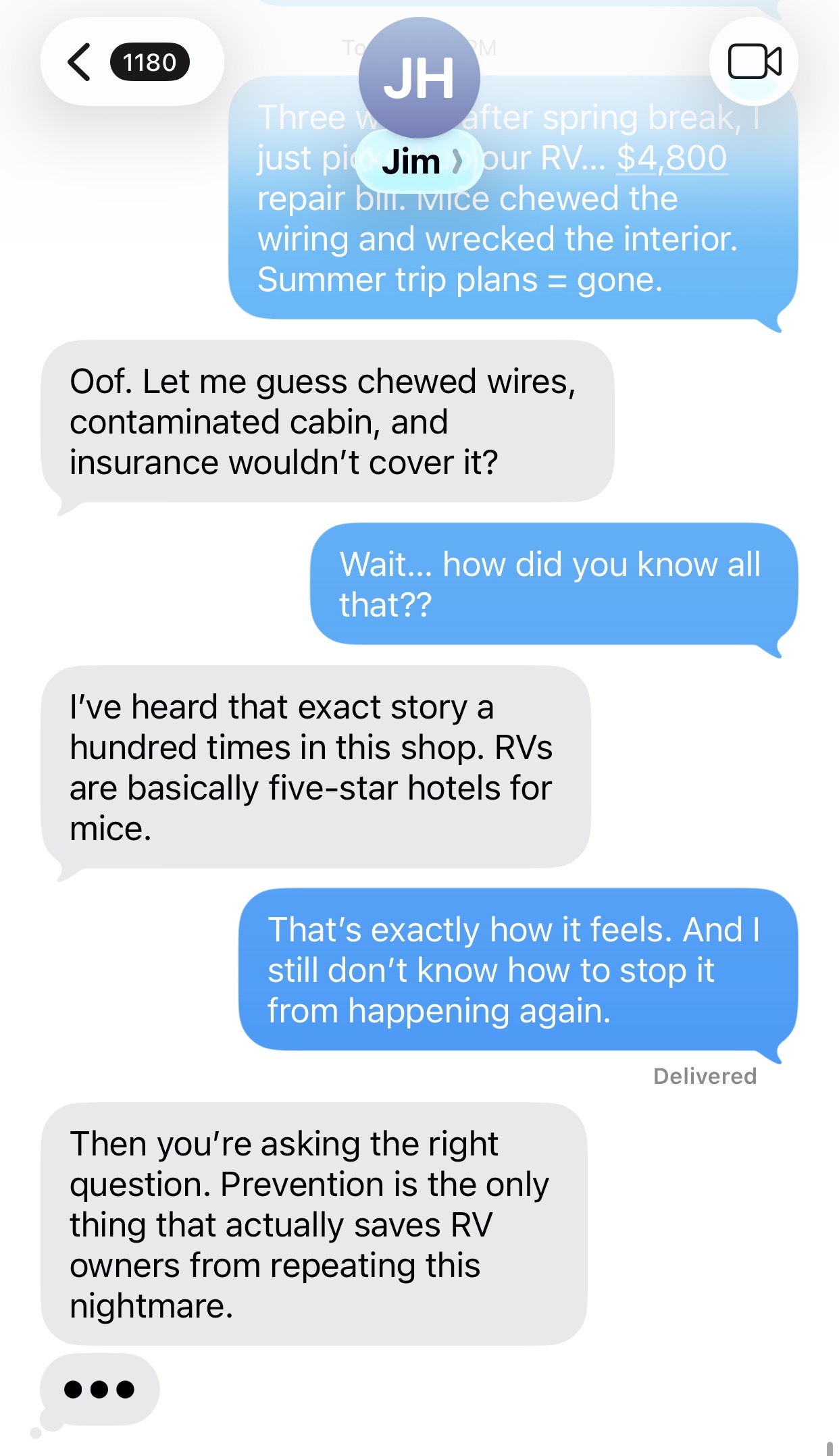
He nodded slowly. "Let me guess, chewed wiring, contaminated interior, insurance denied the claim?"
"How did you know?"
"Because I've heard that exact story a hundred times."
Jim, it turned out, managed a commercial fleet of delivery trucks and RVs for a rental company, 200+ vehicles, stored outdoors year-round.
"Five years ago, we were losing $80,000 a year in rodent damage," he said. "Vehicles coming back from winter storage destroyed. Wiring chewed. Interiors contaminated. Customers furious."
"So what did you do?"
He leaned forward.
"I learned that you and 99% of RV owners are making the same critical mistake."
"You're Trying To Kill The Mice… Instead Of Banishing Them From Your RV"
"So what's the alternative?"
"You need to make your RV someplace mice refuse to enter in the first place. You need to attack their greatest strength, and turn it into their greatest weakness."
He explained something that changed how I understood the entire mouse problem:
"A mouse's sense of smell is roughly 1,000 times more powerful than a human's. They navigate by scent. They find food by scent. They communicate by scent. They detect danger by scent."⁹
"That supersensitive nose is their superpower. But it's also their Achilles' heel."
"Because if you can overwhelm that olfactory system, if you can make the air inside your RV 'scream' DANGER to their hypersensitive noses, they won't just leave."
"They physically CAN'T stay."
"It's like asking you to live inside a room filled with tear gas. Your body won't let you."
Why "Scent Highways" Are the Real Reason Mice Keep Coming Back to Your RV
Then Jim told me something I'd never heard before, and it explained why our mouse problem came back year after year.
"Mice don't find your RV by accident," he said. "They follow scent trails."
"When mice urinate, which they do constantly, up to 3,000 micro-droplets per day, they're not just relieving themselves. They're building a chemical GPS system."¹⁰
"Those urine trails create what we call 'scent highways.' Invisible pathways that tell every mouse in the area: 'SAFE ZONE. FOOD HERE. SHELTER HERE. BREED HERE.'"
"Once those scent highways are established in your RV? They're like neon signs advertising a five-star rodent hotel."
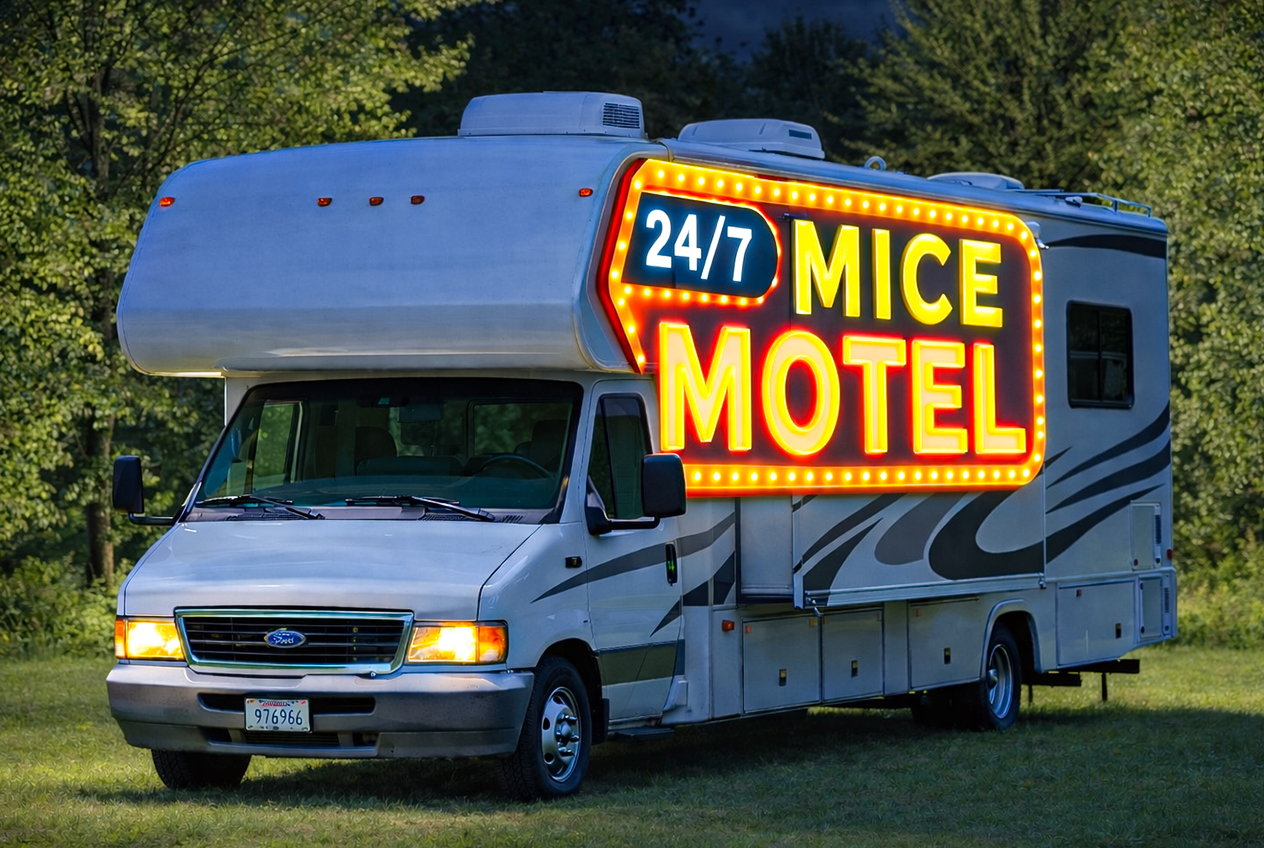
"Even if you clean your RV spotless in spring, even if you kill every mouse currently inside, those chemical signals persist. New mice follow the old trails right back in."
"That's why your mouse problem comes back every single year. You're treating the symptoms. But the scent highways are the root cause."
My mind was racing.
"So every RV that's ever had mice... has these invisible scent highways?"
"Every single one. And every spring, when new mice are looking for territory? They follow those trails straight back into your rig."
This explained everything.
Why traps didn't work, they catch individual mice but leave the scent highways intact.
Why cleaning didn't work, soap and water don't destroy the chemical signals.
Why sealing entry points didn't work, desperate mice will chew new openings to follow an established scent highway.
Why our mouse problem came back every year like clockwork.
"So how do you destroy the scent highways?" I asked.
Jim smiled.
"That's exactly what I'm about to show you."
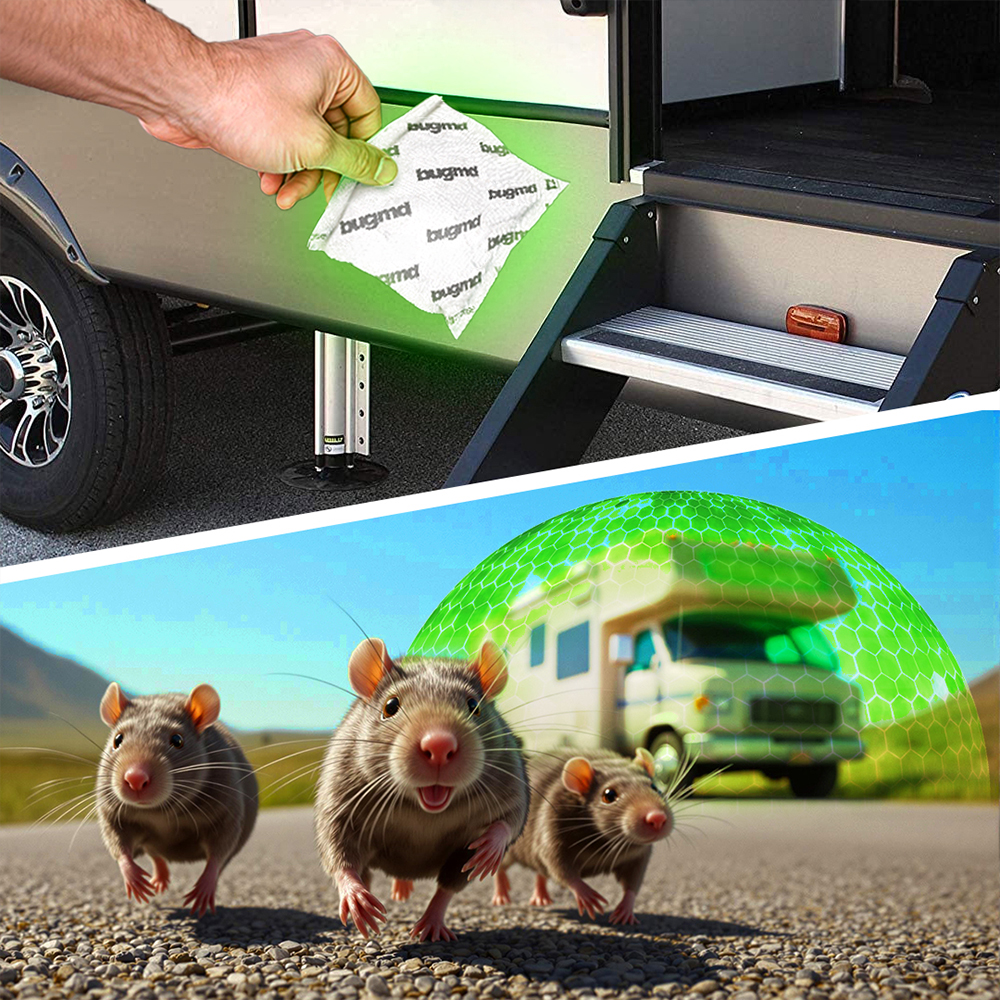
The 4-Layer Essential Oil Scent Barrier That Commercial Fleets Have Used for Years
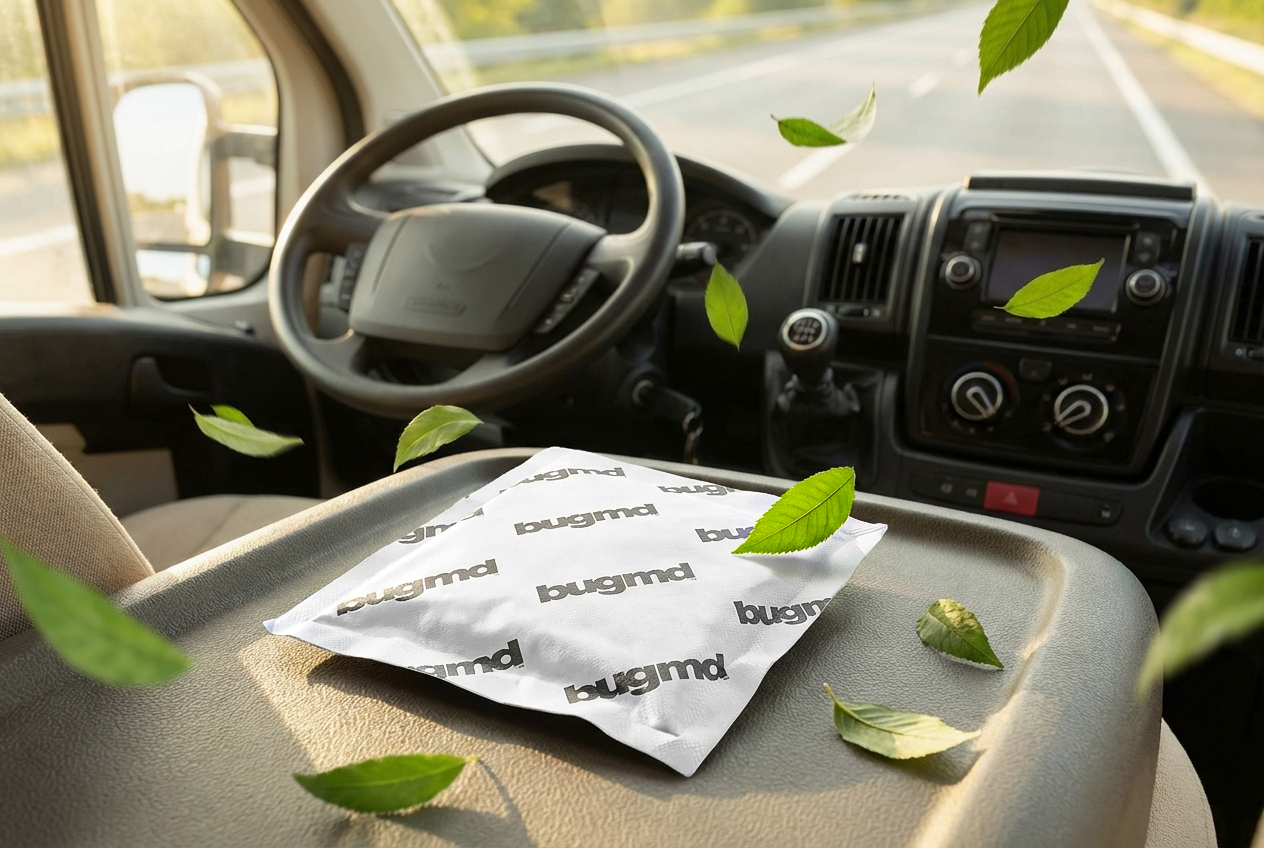
Jim pulled out his phone and showed me a product: BugMD Vamoose Plus.
"This is what we switched to five years ago for our entire fleet," he said. "And it changed everything."
He explained the four-essential-oil technology, and the science behind it is fascinating:
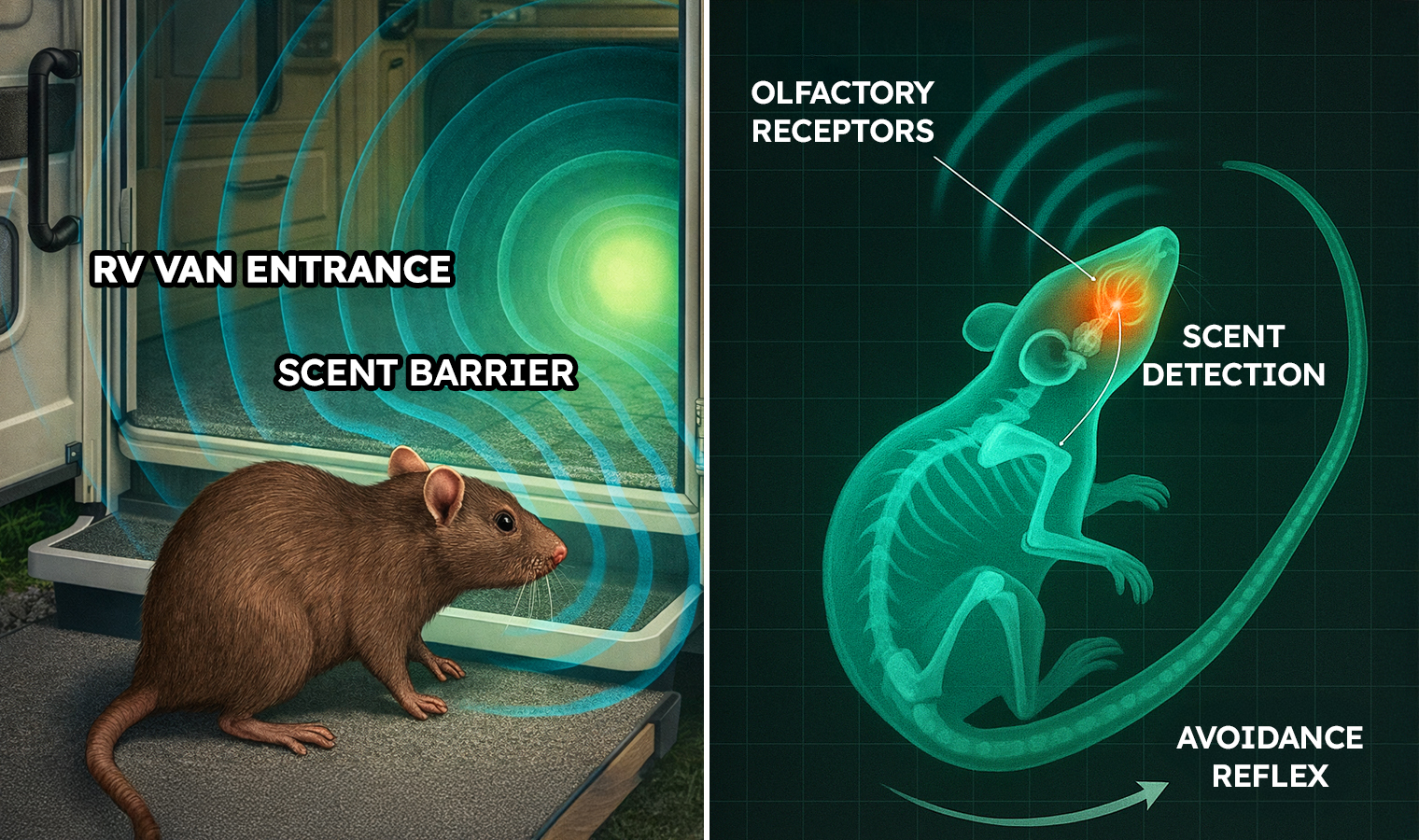
LAYER 1: PEPPERMINT OIL, The Panic Trigger
Peppermint oil's sharp menthol vapors activate the same neural pathways in a mouse's brain that fire when they sense a predator, a hawk, a fox, a snake.
To a mouse, your RV suddenly smells like death is waiting inside.
This is a hardwired survival response. Mice can't adapt to it. It's not a learned behavior, it's burned into their evolutionary DNA.⁹
Think of it this way: you can't "get used to" the feeling of your hand touching fire. Your nervous system won't allow it.
LAYER 2: LEMONGRASS OIL, The Navigation Destroyer
Lemongrass oil contains compounds called citral and geraniol that overwhelm the rodent's olfactory system, the same system they depend on to find food, mark territory, and detect danger.
When exposed, mice experience total olfactory confusion. Their internal GPS goes haywire. They become disoriented, anxious, and instinctively flee to re-establish their bearings.¹¹
It's like someone scrambling the signal on your phone's GPS while you're lost in an unfamiliar city. Panic sets in.
LAYER 3: CLOVE OIL, The Physical Barrier
Clove oil's active compound, eugenol, produces a burning, chemical-like sensation in the rodent's delicate nasal passages.
To them, the air itself has turned hostile. It's like breathing pepper spray. They physically cannot tolerate it.¹²
Even the most desperate, cold, hungry mouse will turn around when it hits this layer.
LAYER 4: ROSEMARY OIL, The Reinforcement Lock
Rosemary oil's natural terpenes, including cineole and camphor, overstimulate the rodent's nervous system, creating complete sensory overload.
More importantly, rosemary oil helps the other three oils hold their ground longer, maintaining the barrier strength for a full 30 days.¹³
It's the defensive wall that keeps the other three layers working around the clock.
"And here's the engineering genius," Jim continued.
"It's not just the oils. It's the delivery system."
DIATOMACEOUS EARTH CARRIER:
The oils are infused into a carrier of diatomaceous earth, a porous, heat-stable material that slowly releases the essential oils over 30 days.
Unlike sprays that evaporate in hours, or cotton balls soaked in oil that last a few days at best...
This creates a CONTINUOUS protective barrier for a full month.
Even through extreme temperature swings, freezing winter nights to blazing summer heat, the carrier releases oils at a consistent, effective concentration.
"That's why dryer sheets and peppermint cotton balls fail," Jim said. "They lose potency in 48-72 hours. These pouches maintain therapeutic concentration for 30 days straight."
"But Does It Actually Destroy the Scent Highways?"
This was my key question. If the scent highways were the root cause, I needed to know this solved it.
"Absolutely," Jim said. "The four-oil combination doesn't just repel mice, it overwhelms and obliterates the chemical signals they've laid down. The pheromone trails, the urine markers, all of it."
"New mice can't detect the old scent highways because the essential oil barrier is thousands of times stronger than the mouse urine signals."
"It's like trying to hear a whisper in a hurricane."
"So the scent highways are essentially erased?"
"Neutralized. And as long as you maintain the barrier by replacing pouches every 30 days, no new highways can be established."
"Your RV becomes invisible to mouse colonies. They literally can't detect it as a shelter option anymore."
This was the missing piece. This is why nothing else had worked.
Every other solution I'd tried addressed the MICE.
This addressed the ROOT CAUSE, the invisible scent infrastructure that kept attracting them back.
Why Professional Pest Control Companies Don't Want You to Know About This
"If this works so well," I asked Jim, "why doesn't every RV owner know about it? Why doesn't every exterminator recommend it?"
Jim's expression hardened.
"Because there's no profit in it."
"Think about it. If I sell you a $50 solution that prevents your mouse problem permanently... I make $50 once."
"If I sell you a $350 quarterly extermination service that never fully solves the problem... I make $1,400 a year. For years."
"The pest control industry is built on recurring revenue. Not on solutions that actually work."
I thought about the $350 I'd paid my exterminator. The bait stations he'd placed that did nothing. The follow-up visit he'd already scheduled.
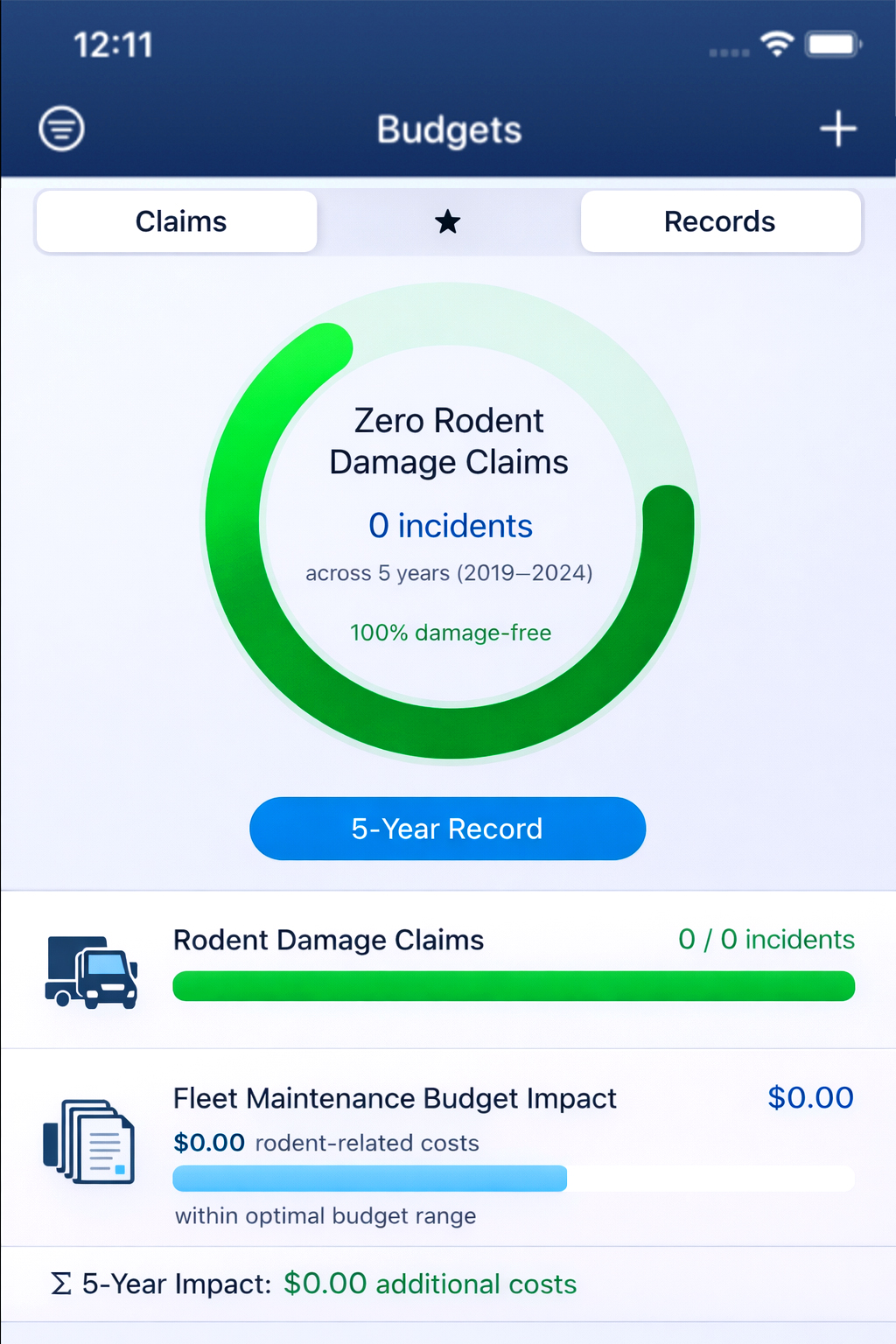
"My commercial fleet accounts figured this out five years ago," Jim said. "We went from $80,000 in annual rodent damage to virtually zero. The pest control company we fired was NOT happy about losing that contract."
The Reviews That Made Me Order on the Spot
That night, I searched "BugMD Vamoose Plus" the second I got home.
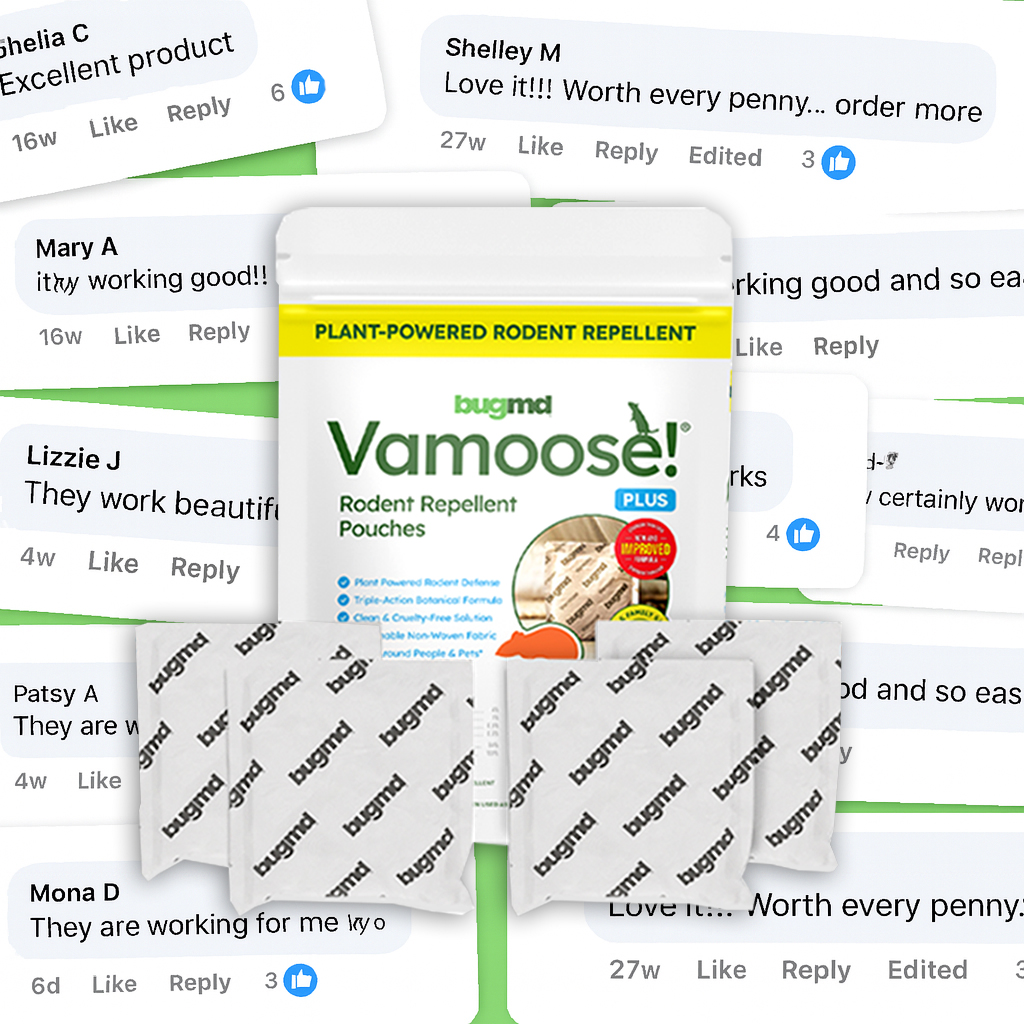
The product page loaded. Over 4,000 five-star reviews.
But it wasn't the number that stopped me. It was what people were saying.

That last one hit me hard.
$3,880 in car repairs. Almost exactly what we'd just paid.
Then I found reviews from RV owners specifically:
"You can't believe that this works but it sure as heck does. I have an antique car collection and I was forever worried about my car wiring. Not any longer thanks to Vamoose.", Dan Riazxi
"Had bad rodent issue, used Vamoose last winter, not a mouse seen. Definitely ordered for this year.", Kathryn Wiley
"It was used in a mouse/rat infested shed by a river. They just disappeared. I couldn't believe it.", Joanne Rowlee
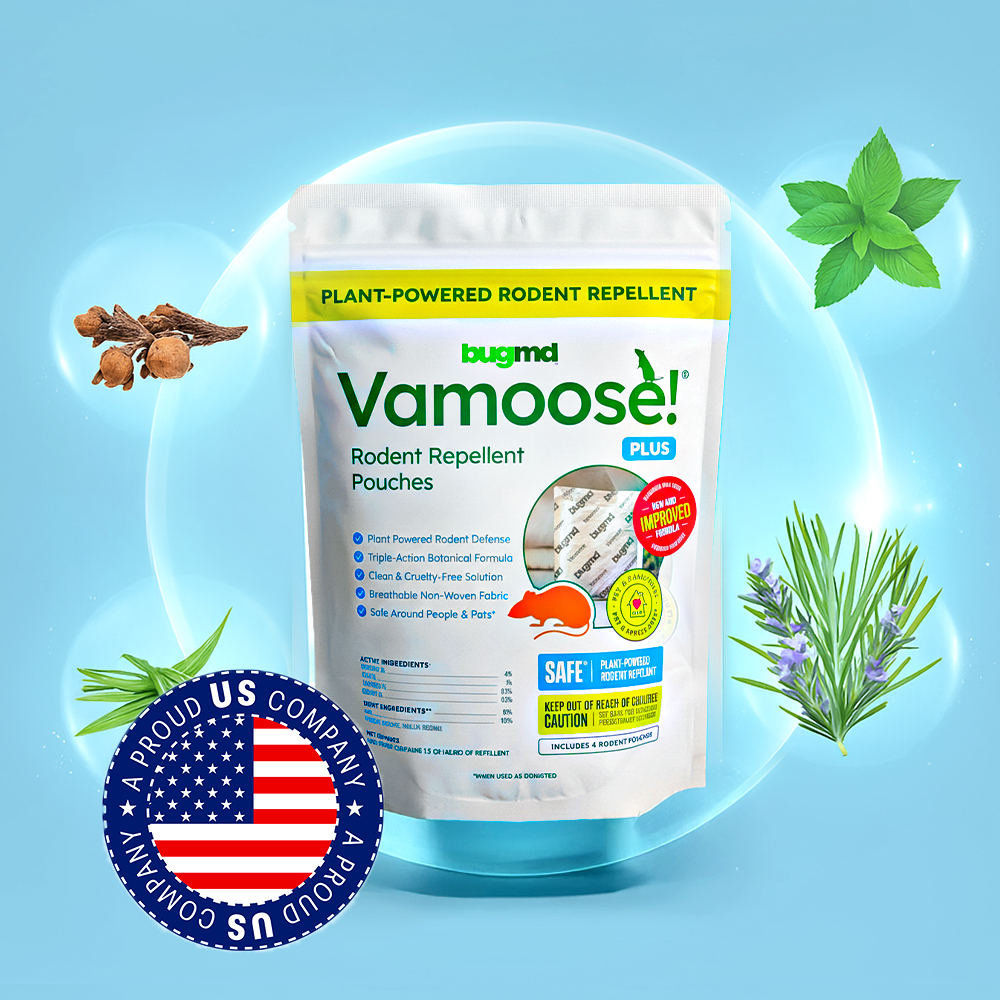
I checked the ingredients:
✓ Peppermint Oil
✓ Clove Oil
✓ Lemongrass Oil
✓ Rosemary Oil
Every single component Jim described.
Free of harsh chemicals. No traditional pesticides. Safe around people and pets when used as directed.
And there was a banner at the top: "Up to 68% Off, Spring Road Trip Protection Special"
I Didn't Want to Wait Another Day
It was almost 11 PM.
I'd been researching for hours.
Our repaired trailer was sitting back at the storage lot, freshly cleaned, rewired, and completely unprotected.
Another mouse colony could be moving in right now.
I thought about everything we'd already lost:
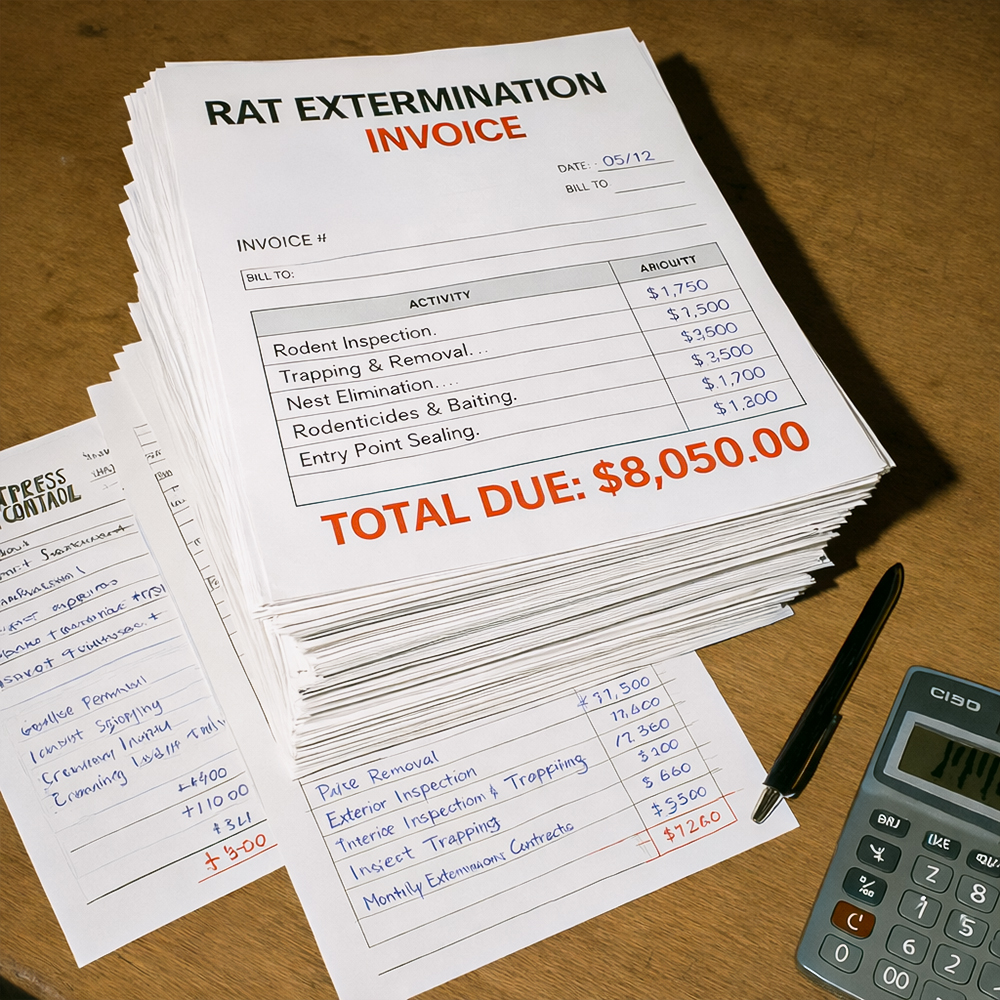
$4,800 in wiring repairs and decontamination
$600 on failed "solutions" (traps, ultrasonic devices, mothballs, dryer sheets, steel wool)
$350 on an exterminator who placed useless bait stations Spring break, cancelled. Kids devastated. The stress. The arguments. The shame.
Total: Nearly $6,000. And our RV was STILL vulnerable.
Vamoose Plus was running a spring road trip special.
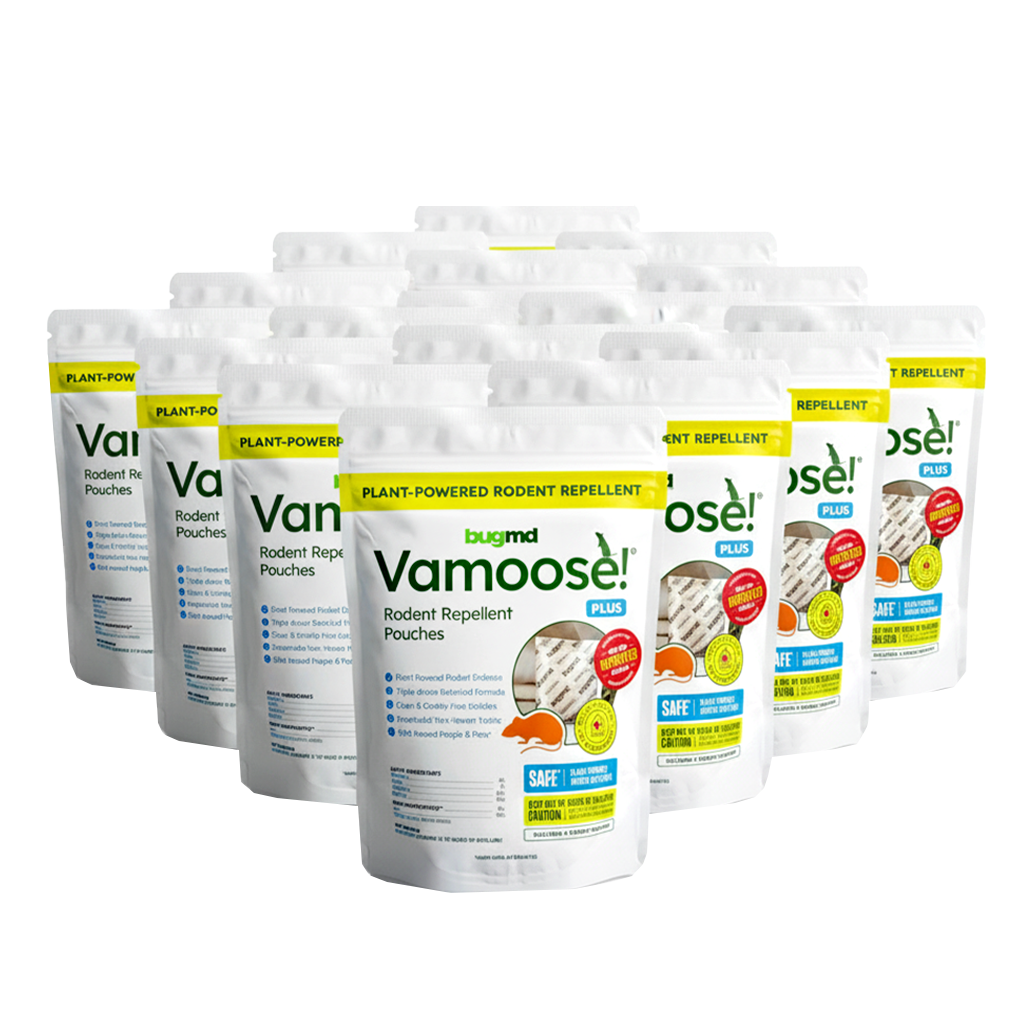
The 32-pouch bundle was $150.72, a 68% discount.
That's less than I'd spent on TWO products that didn't work.
About 3% of what we'd already lost.
Plus they had a 30-day satisfaction guarantee, if it didn't work, I could return it.
What did I have to lose?
More repair bills? Another ruined vacation? My sanity?
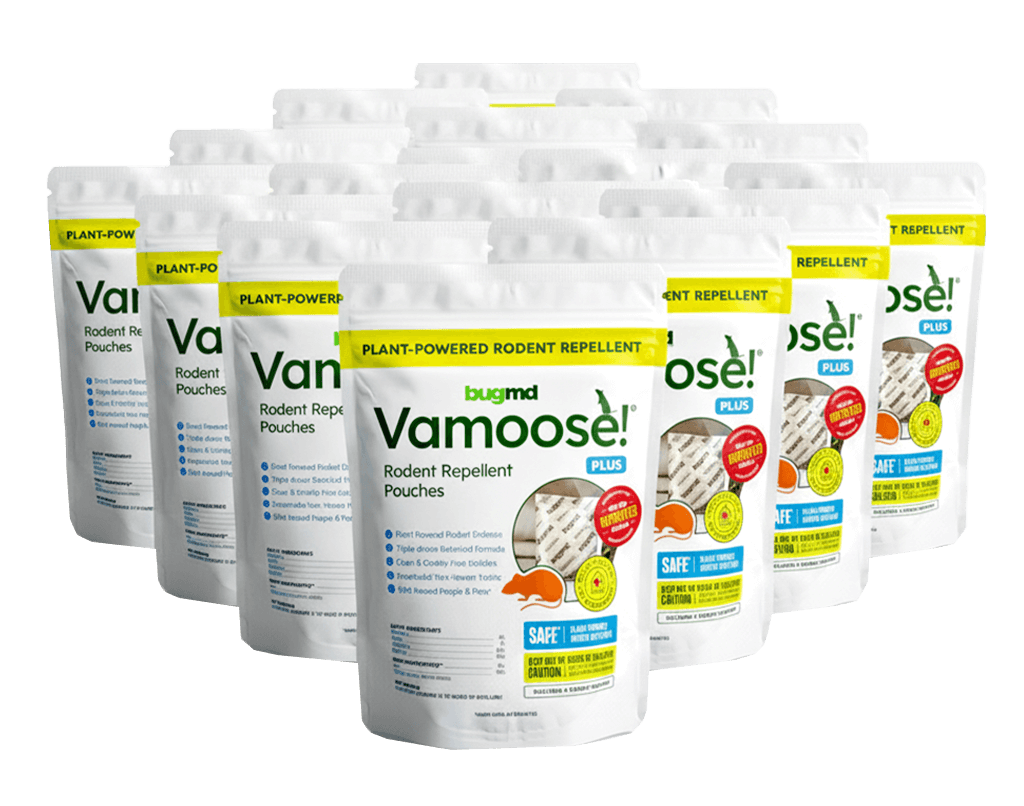
I ordered the 32-pouch bundle. Enough to protect our trailer for eight straight months, the entire spring, summer, and fall travel season.
Then I added a second 16-pack for the garage where we sometimes park the trailer at home.
It arrived three days later.

The moment I opened the box, a fresh, intensely minty scent filled the kitchen.
Not harsh. Not chemical. Actually pleasant.
"Ooh, what smells good?" Emma asked, wandering over.
"This, baby girl, is what's going to protect our RV so we never miss another trip again."
I drove to the storage lot that afternoon and placed the pouches throughout our freshly repaired trailer:
Two on the dashboard area
One in the kitchen near the cabinets
One under each dinette seat
One in the bedroom
One in each bathroom
One in each exterior storage compartment
Strategic placement took about two minutes. No tools. No complicated setup. Just open the pouch and place it.
Then I waited.

Week 1: I Checked Every Other Day
I'm not going to lie, I was paranoid.
After what we'd been through, I didn't trust anything.
I visited our trailer every other day that first week. Flashlight in hand. Inspecting every corner. Looking for ANY sign of mice.
Day 2:
No droppings. Zero. (After our repair, the decontamination team had confirmed zero baseline.)
Day 4:
Still nothing. Entry points completely untouched. No chew marks anywhere.
Day 7:
Not a single dropping. Not a single scratch mark. Nothing.
When I opened the door each time, that fresh minty scent was the first thing I noticed. Clean. Bright. Definitely present.
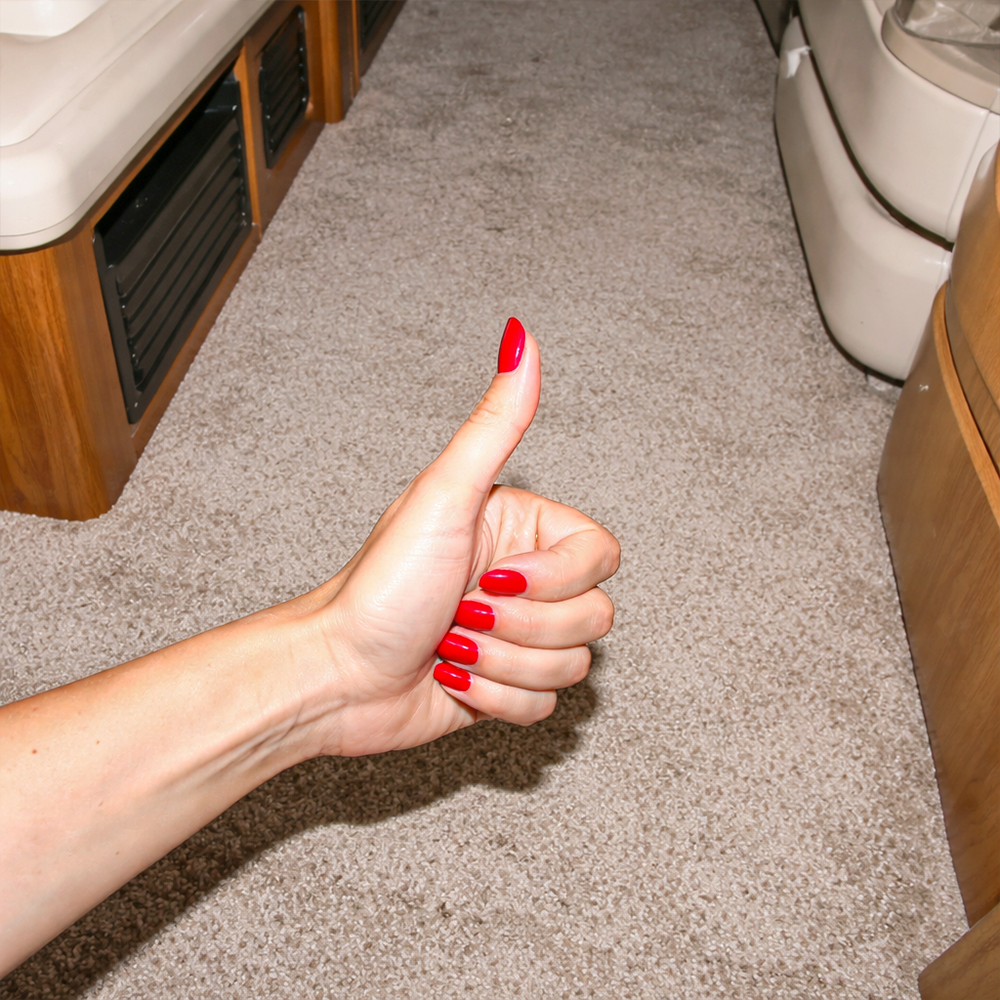
But I wasn't ready to believe yet. One week doesn't prove anything.
I'd been burned too many times.
Week 3: Another RV Owner Asked What I Was Doing
Three weeks in, I was at the storage lot doing a routine check when another owner, Diane, walked over.
"Linda, I heard about your spring break nightmare. We just opened ours last weekend and found $2,100 in damage. The AC ductwork is shredded."
"Oh no, Diane. I'm so sorry."
"What did you end up doing about it? We can't afford to keep paying for this."
For the first time since our disaster, I felt like I had an actual answer.
I opened our trailer door and showed her the pouches.
"These. I've been using them for three weeks. Not a single sign of mouse activity."
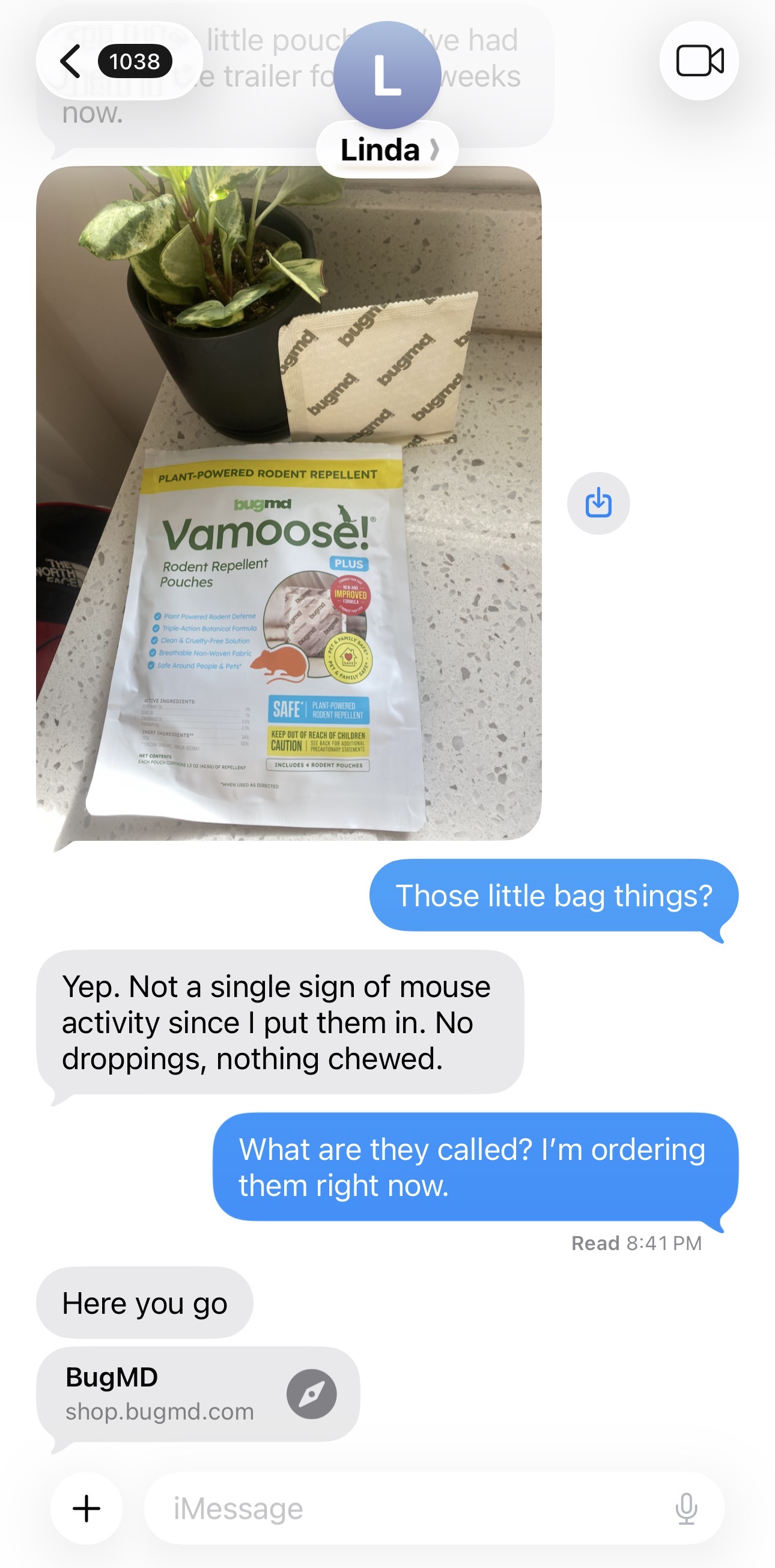
She pulled out her phone. "What are they called?"
A week later, she texted me: "Linda, I don't know what's in those things but we haven't seen a dropping since we put them in. Thank you thank you thank you."
Month 2: The Moment I Knew This Was Real
At the 30-day mark, I replaced all the pouches exactly as recommended.
This is important, Jim emphasized that the 30-day replacement cycle is non-negotiable.
It's the difference between continuous protection and a gap that mice can exploit.
I set a calendar reminder.
First of every month:
"Replace Vamoose pouches."
By month two, the evidence was undeniable:
Zero droppings, anywhere
Zero chewing damage, not even exploration marks
Zero nesting attempts
Zero entry attempts at previously vulnerable points
No ammonia smell.
No contamination.
No damage.
Just A Clean, Protected, Ready-To-Go Travel Trailer.
I actually sat down in our dinette, the same dinette where I'd found 200 droppings two months earlier, and cried.
Happy tears this time.
"We're going on our summer trip," I told Tom that night.
He looked up from the dishes. "You sure?"
"I'm sure. The trailer is clean. It's protected. And we're never going through this again."

June: Our Summer Road Trip Was Perfect
We hit the road the third week of June.
Yellowstone, six days, the trip we'd been dreaming about since the kids were babies.

I placed fresh Vamoose Plus pouches throughout the trailer the day before we left.
And every campground we stopped at, where other RV owners were battling mice, chipmunks, and field mice finding their way inside, our rig stayed clean.
"How do you keep mice out?" one couple asked at a campground outside Cody, Wyoming.
I told them about Vamoose Plus.
They ordered it on their phones that night.
By the end of our trip, I'd recommended it to six different families.
Every single one followed up with a thank-you text.

Here's How Vamoose Plus Actually Works (The Full Science)
After our successful summer, I wanted to understand exactly WHY this worked when $6,000 worth of other solutions failed.
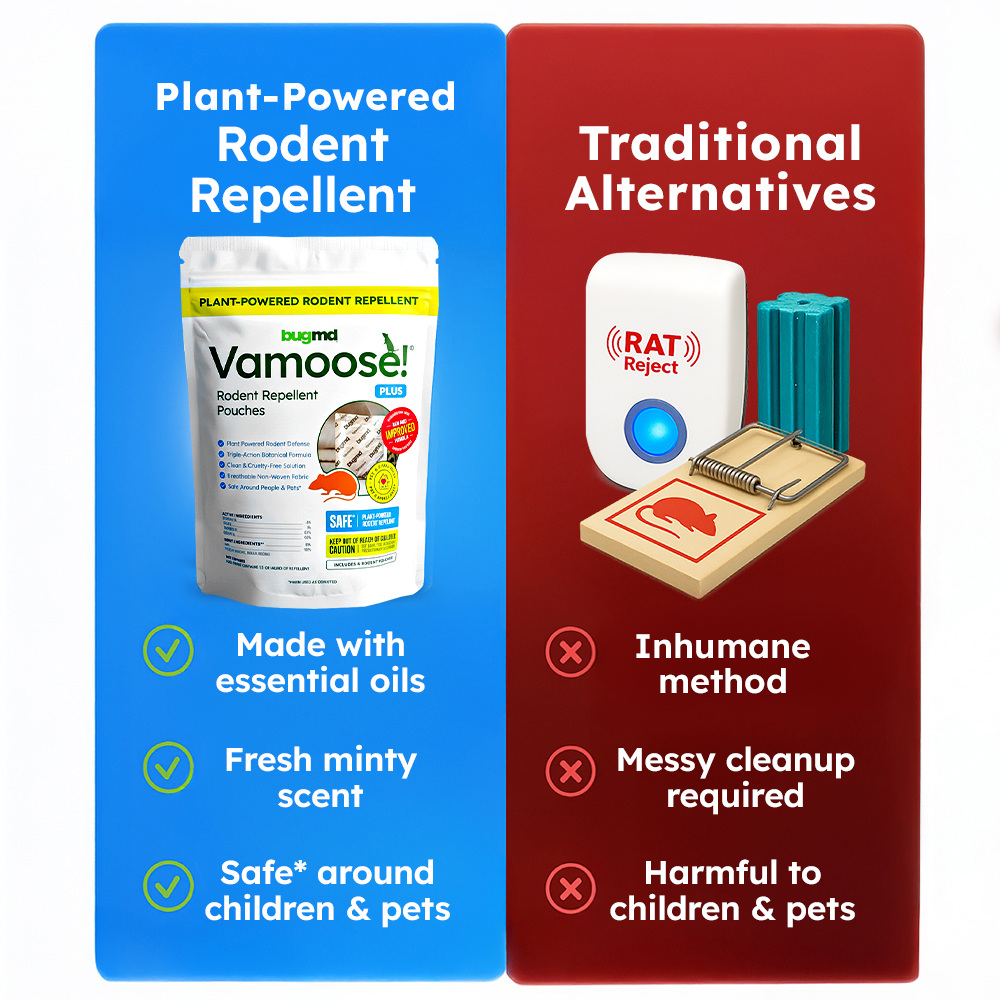
The answer comes down to the fundamental difference between REACTIVE and PREVENTIVE rodent control.
Traditional Rodent Control = REACTIVE:
Traps, poison, and exterminators try to deal with mice AFTER they've already moved in.
By then, they've been chewing, nesting, and contaminating for days or weeks.
You're fighting a war you've already lost.
Vamoose Plus = PREVENTIVE:
It creates an invisible barrier that mice refuse to cross.
They never get inside.
Damage never starts.
It's like the difference between installing a security system BEFORE a break-in versus trying to catch the burglar after they've ransacked your home.
The Four-Layer Scent Barrier in Detail:
Layer 1: PEPPERMINT OIL
"The Predator Alarm" Creates what professionals call an "olfactory wall" that triggers immediate survival panic in approaching rodents.
Their instinct screams: "PREDATOR. DANGER. LEAVE NOW."
This overrides every other instinct, even the desperate need for shelter.
Layer 2: LEMONGRASS OIL
"The GPS Scrambler" Creates complete olfactory confusion.
Combined with peppermint, it creates a "double-negative" sensory experience.
If the peppermint is an electric fence, the lemongrass is a smoke screen that disorients them completely.
Layer 3: CLOVE OIL
"The Physical Deterrent" Creates burning discomfort that rodents cannot tolerate.
Combined with the panic from peppermint and confusion from lemongrass, even the most determined mouse gives up.
Layer 4: ROSEMARY OIL
"The 30-Day Lock" Creates sensory overload and helps the other oils maintain barrier strength for the full 30 days, even through extreme temperature swings.
And the diatomaceous earth carrier ensures slow, consistent release regardless of whether your RV is baking in 100°F summer heat or sitting in 20°F spring cold snaps.
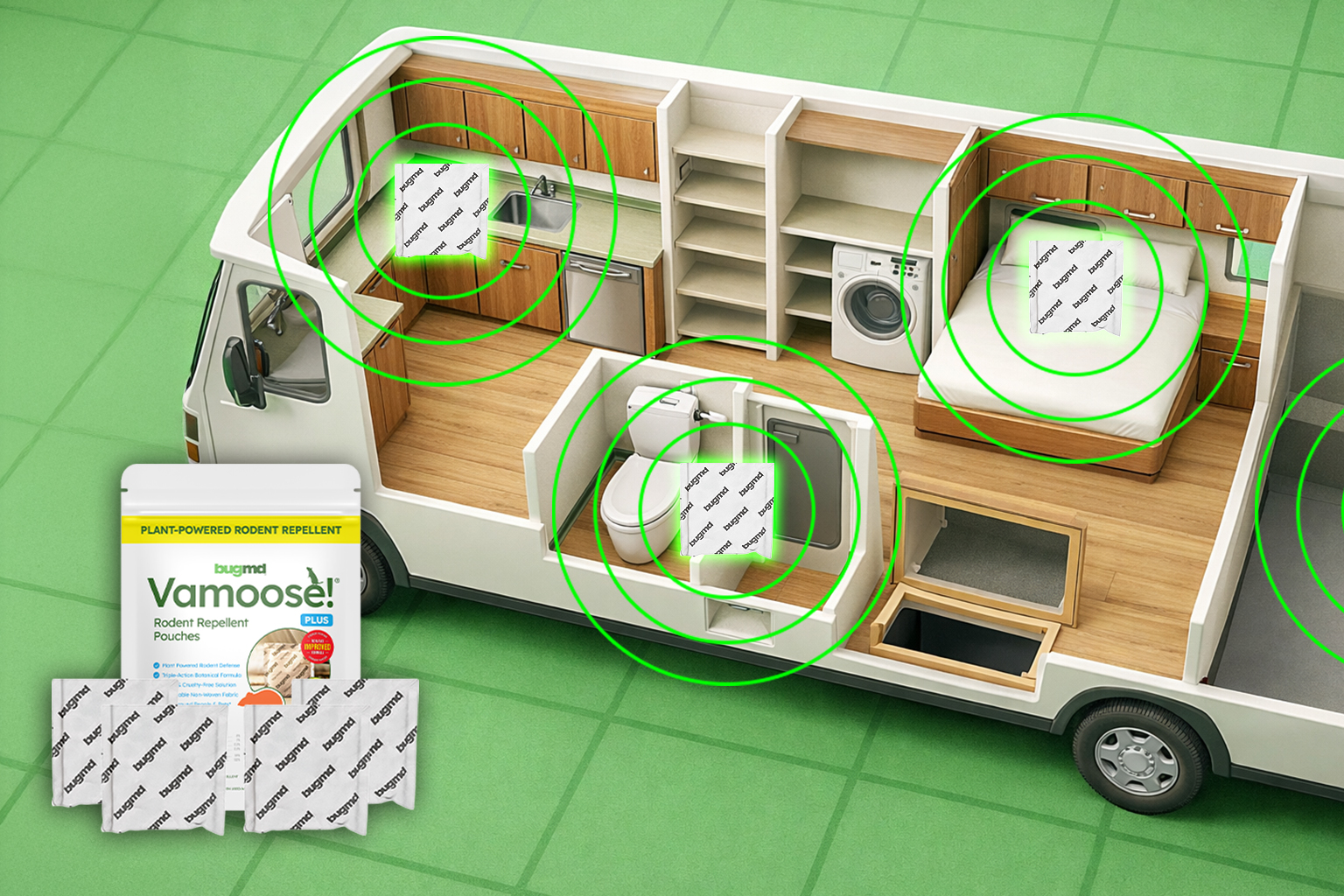
"For most RVs," Jim had told me, "4-8 pouches placed strategically is all you need."
Real RV Owners. Real Results.

30-Day Satisfaction Guarantee

Try Vamoose Plus™ for 30 days with complete confidence.
If you don't see rodents stay completely away from your RV...
If mice still manage to enter despite using the pouches as directed...
If you're not satisfied for ANY reason...
Just contact BugMD's customer support and they'll process your return.*
*30-Day Satisfaction Guarantee. Just pay a small return processing fee and return shipping for returns.
That's how confident they are that Vamoose Plus will protect your RV.
Because it works. For commercial fleets. For storage lots. For families like mine.
How to Use Vamoose Plus, Complete RV Protection Protocol
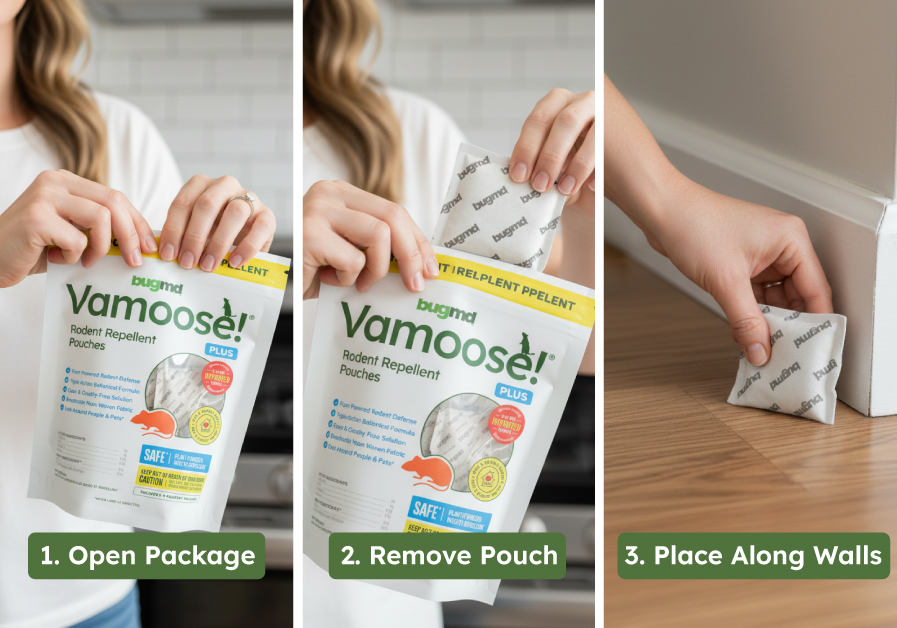
Step 1: Open the pouches, each comes ready to use straight from the package.
Step 2: Place pouches in strategic locations throughout your RV:, Dashboard area: 1-2 pouches, Kitchen/living area: 1-2 pouches, Bedroom: 1 pouch, Bathroom areas: 1 pouch each, Each exterior storage compartment: 1 pouch
Step 3: Replace every 30 days for continuous protection. Set a phone reminder.
That's it. No complicated setup. No dangerous chemicals. No dead mouse cleanup.
Just open, place, and protect.
Pro Tips From Experienced RV Owners:
For Class A / Large Motorhomes: Use 6-8 pouches for complete coverage
For Travel Trailers / Fifth Wheels: Use 4-6 pouches
For Class B / Camper Vans: Use 3-4 pouches
For Extreme Rodent Areas: Add 1-2 extra pouches
Before ANY Storage Period: Place fresh pouches the day you store your RV
During Travel Season: Keep pouches in place, they protect while you camp, too

What Happens If You Do Nothing?
I want you to think about two different futures.
FUTURE 1: You Close This Page.
You open the door for your next big trip and the smell hits you first.
Then you see the damage.
Chewed wires. Shredded upholstery. Droppings everywhere. Nests in the engine compartment.
Your repair bill: $3,000. $5,000. Maybe more.
Your insurance? Denies the claim. "Preventable maintenance."
Your family trip? Cancelled. Again.
The kids' faces when you tell them? That look of disappointment that keeps you up at night.
And next year? It happens again. Because the scent highways are still there, drawing mice back like a magnet.
An endless, expensive, heartbreaking cycle.
FUTURE 2: You Take Action Right Now.
You invest less than the cost of a single tank of RV gas to protect your rig for months.
Within days, mice stop approaching your RV entirely.
You do a check at the storage lot. No droppings. No damage. No nests. No chewing.
Just... peace of mind.
Your spring trip happens on schedule. Your summer trip is perfect.
You open the door to a clean, fresh, protected interior, every single time.
You never face that sickening moment of discovery again.
You save thousands, maybe tens of thousands, in repair costs over your RV's lifetime.
And when you sell your RV someday? Clean inspection. Full market value.
Which future do you want?
Limited-Time Spring Road Trip Special: Up to 68% Off
Right now, BugMD is running their Road Trip Protection discount for Vamoose Plus.
You shouldn't have to choose between:
❌ Devastating repair bills (average $3,000-$5,000+)
❌ Toxic chemicals that contaminate your family's living space
❌ Worthless pest control contracts that never solve the root problem
❌ Snap traps that let damage continue while you play endless catch-up
❌ The anxiety of wondering what you'll find every time you open that RV door
You deserve a plant-powered solution that actually works, and works consistently trip after trip, season after season.
But this discount has a strict time limit.
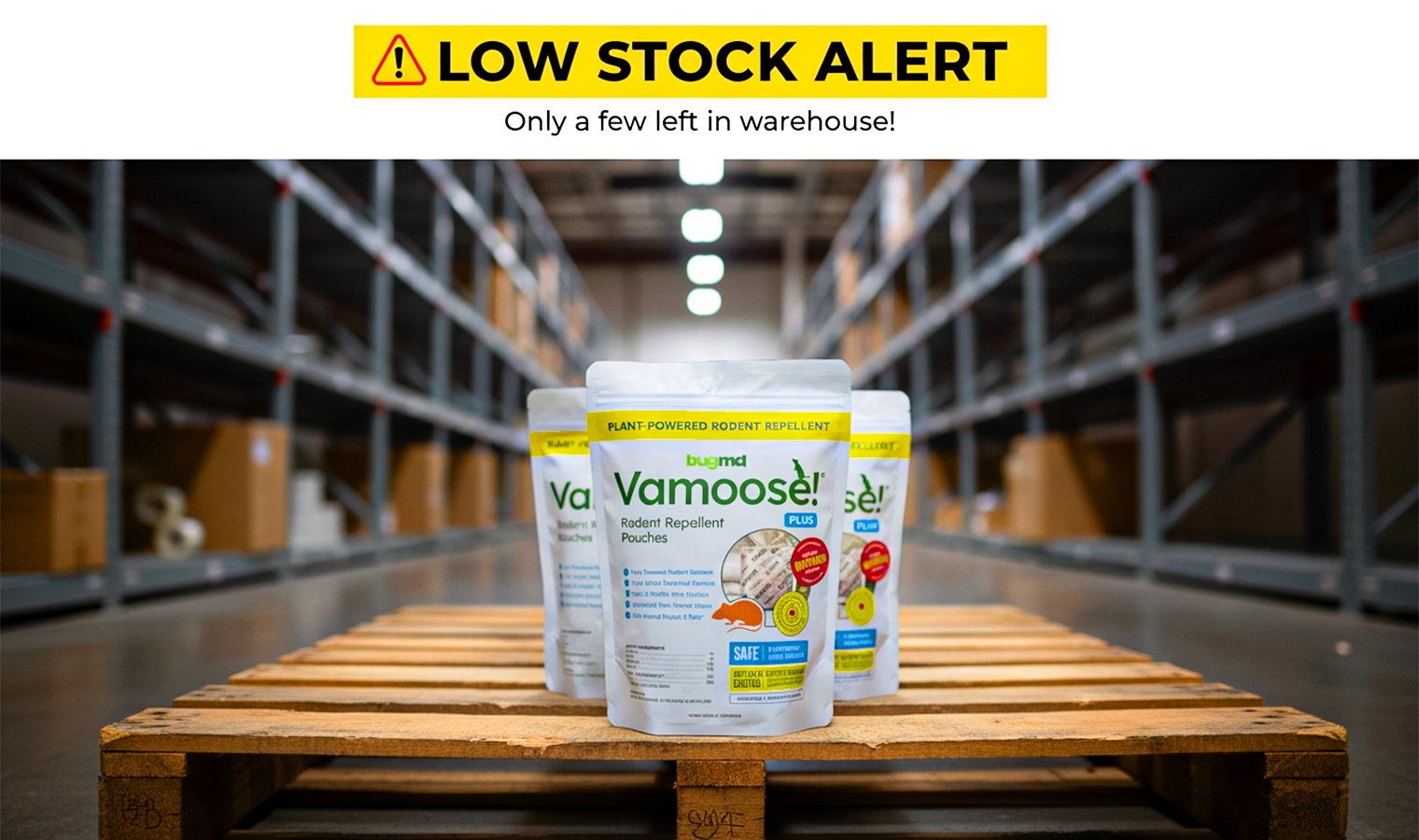
⚠️ December Supply Alert ⚠️
Critical Inventory Update from BugMD:
The latest production batch is selling out at an unprecedented rate.
Here's why this matters right now:
Spring is THE peak season for RV owners discovering winter rodent damage.
Demand for Vamoose Plus surges every March through June as millions of families open up their rigs and realize they need protection.
If they sell out (and they WILL based on current demand):
You'll wait 4-6 weeks for the next production run You'll lose access to this discount entirely Your RV will remain completely vulnerable through prime road trip season
Is that a risk you're willing to take with your family's vacation, and your investment?
Don't Wait Another Day
Because every day you wait is another day of:
Mice breeding inside your RV
Health hazards accumulating in your family's living space
Property damage that costs thousands to repair
The stress and dread of wondering what you'll find
Missing out on the trips and memories your family deserves
You deserve better.
You deserve to open your RV door to a clean, fresh, protected interior, every single time.
Claim your Spring Road Trip discount now before they sell out:
UpDATE
Frequently Asked Questions
A: Based on RV size:, Class B / Camper Vans: 3-4 pouches, Travel Trailers / Fifth Wheels: 4-6 pouches, Class A / Large Motorhomes: 6-8 pouches, Add 1-2 extra for extreme rodent areas or very long storage
A: Not at all. Most people describe it as a mild, pleasant minty herbal scent. It's noticeable but not overpowering. Mice, with their 1,000x more sensitive noses, experience it completely differently.
A: Yes, Vamoose Plus uses a plant-powered formula that's safe around people and pets when used as directed. Free of harsh chemicals or traditional pesticides.
A: Absolutely. This is a critical placement area. Rodents often enter through external bays first.
A: Existing rodents will typically vacate within days as the scent barrier becomes overwhelming. You may see increased activity initially as they leave, then silence.
A: Yes. The diatomaceous earth carrier releases oils consistently from -20°F to 120°F. Whether your RV is sitting in summer heat or spring cold snaps, the protection holds.
A: Each pouch provides 30 days of protection. Replace monthly for continuous coverage.
A: No. The panic response triggered by the essential oil blend is hardwired into their evolutionary biology. They cannot adapt to it any more than you can adapt to breathing tear gas. It's a neurological response, not a learned behavior.
A: Contact BugMD's customer service within 30 days. They offer a 30-day satisfaction guarantee.* (*Just pay a small return processing fee and return shipping for returns.)
A: Because there's no profit in recommending a solution that costs less than a single exterminator visit. Jim explained this to me directly, the pest control industry is built on recurring revenue, not one-time solutions that actually work.
What People Are Saying:
P.S., This discount is only available while spring inventory lasts.
BugMD faces rising costs for pharmaceutical-grade essential oils due to global supply constraints. When this batch sells out, prices will go up. If you want Vamoose Plus at up to 68% off, you need to secure your order right now.
Don't let mice turn your RV into their personal resort, and your bank account into their repair fund.
P.P.S., Remember the guarantee.
You have nothing to lose except future rodent damage and repair bills.
Try Vamoose Plus for 30 days. Place the pouches in your RV as directed. Replace them monthly.
If you're not completely satisfied, contact customer support for a return.*
But I'm willing to bet you'll be ordering more pouches for your garage, shed, and house, and recommending them to every RV owner you know.
Just like I did.
Because once you see how well this works, you'll wish you'd found it sooner.
*30-Day Satisfaction Guarantee. Just pay a small return processing fee and return shipping.
- 1. Centers for Disease Control and Prevention, "About Hantavirus," CDC.gov, Updated 2025.
- 2. Critter Stop, "How Fast Do Rats Reproduce: A Comprehensive Guide," critterstop.com.
- 3. CDC, "Clinician Brief: Hantavirus Pulmonary Syndrome (HPS)," CDC.gov, 2025. (HPS is fatal in nearly 4 in 10 people infected.)
- 4. RVtravel poll, as cited by Box-Kat, "How Much Does It Cost to Repair Rodent Damage to Car?" box-kat.com, 2025.
- 5. Automatic Trap Company, "The Growing Problem of Rodent Vehicle Damage," automatictrap.com, 2025. (Repair costs range from $300 to $10,000+.)
- 6. University of Nebraska-Lincoln Extension, "House Mouse Biology and Behavior," Publication EC1847.
- 7. National Pesticide Information Center, "Mothballs: General Fact Sheet," npic.orst.edu.
- 8. Go Aptive, "How to Catch House Mouse," goaptive.com. (Mice can squeeze through holes as small as 1/4 inch.)
- 9. Skedaddle Wildlife, "Are Smells the Best Way to Deter Rats?" skedaddlewildlife.com. (Rat olfactory system differentiates 2,000+ odorants.)
- 10. Pest World (NPMA), "Fascinating Facts You Never Knew About Mice," pestworld.org. (Mice can produce up to 100 droppings per day.)
- 11. International Journal of Pest Management, "Efficacy of Plant-Based Essential Oils as Rodent Repellents."
- 12. Journal of Chemical Ecology, "Olfactory Response of Mus musculus to Plant Compound Mixtures."
- 13. Agricultural and Forest Entomology, "Extended-Release Carrier Systems for Plant-Based Rodent Repellents."
- 14. Critter Control, "Rodent-Caused House Fires," crittercontrol.com. (Rodents responsible for 20-25% of fires with unknown causes.)
- 15. USF Digital Commons, "The cost of rodent damage to structures and property in the United States is estimated at $19 billion annually."